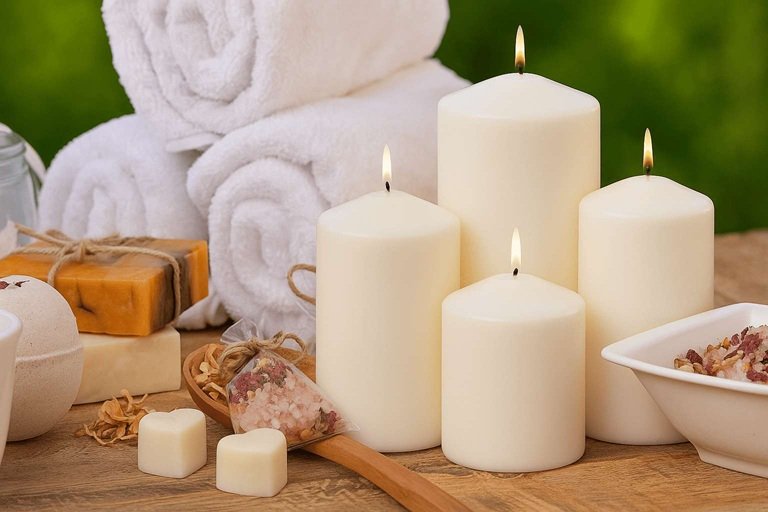
Handmade Artisan Candles as Expressions of Art: Blending Design, Fragrance, and Natural Materials
Handmade artisan candles are no longer simply sources of illumination. They have evolved into objects of design, sensory experiences, wellness companions, decorative accents and meaningful expressions of craftsmanship. When natural materials such as soy wax are combined with carefully considered forms, colours, textures and fragrances, a candle can become something far more personal than a conventional home-fragrance product.
In India, this evolution is particularly relevant to consumers who increasingly appreciate conscious living, handmade products, natural materials, wellness rituals and thoughtfully designed interiors. A beautifully crafted candle can sit at the intersection of all these interests. It can illuminate a room, establish a peaceful atmosphere, complement an interior, accompany meditation or yoga, become part of a spiritual ritual, and serve as a thoughtful gift.
This is where the philosophy behind handmade organic soy wax candles becomes especially interesting. Unlike an anonymous mass-produced object, an artisan candle can reveal something about the maker's choices: the wax selected, the vessel designed, the wick tested, the fragrance composed, the colour developed and the finishing details considered. Every element contributes to the final experience.
Brands such as Mistico Opus represent this broader movement toward handcrafted soy-wax candles that combine decorative appeal with aromatherapy, wellness and conscious-lifestyle positioning. Its current collection includes handcrafted soy-wax jar and pillar-style products positioned for home décor, meditation, rituals, relaxation and gifting. Explore Mistico Opus to discover its current collection.
What Are Handmade Artisan Candles?
A handmade artisan candle is a candle produced with a strong emphasis on craftsmanship, material selection, design and individual finishing. While the basic purpose remains familiar—wax, wick and flame—the artisan approach treats the candle as a complete sensory object rather than a disposable source of light.
The distinction is often found in the details. A handmade candle may involve carefully selected wax, individually prepared vessels, measured fragrance compositions, wick testing, controlled pouring, curing, surface finishing and hand inspection. These stages can require patience because small changes in temperature, formulation, fragrance concentration, wick size or cooling conditions can affect the final result.
That craftsmanship is part of the appeal of handmade aromatherapy jar candles, handmade soy wax pillar candles and other artisan formats. The product is not simply designed to burn. It is designed to exist in a room before, during and after the flame is lit.
This creates three distinct dimensions of the artisan candle experience:
- Visual: the candle contributes colour, shape, proportion and texture to the environment.
- Olfactory: fragrance introduces an atmospheric and emotional dimension.
- Tactile: natural wax, glass, ceramics, labels and other materials contribute to the physical experience.
When these elements work together, the result can feel closer to a small design object than an ordinary household commodity.
Handmade Does Not Simply Mean Imperfect
The phrase "handmade" sometimes creates an assumption that artisan products are necessarily rough or inconsistent. In reality, skilled candle making combines creativity with technical precision.
The maker must understand wax behaviour, wick performance, fragrance compatibility, vessel characteristics and curing. At the same time, the maker makes aesthetic decisions about form, colour, fragrance identity and presentation.
That combination of technical knowledge and creative judgement is what makes artisan candles particularly fascinating.
Why Consumers Are Drawn to Artisan Candles
People often purchase candles for practical reasons, but artisan candles introduce additional motivations. They can become part of home styling, gifting, self-care, meditation, yoga, celebrations or personal rituals.
For consumers searching online for handmade organic jar candles India, vegan scented jar candles India or luxury soy wax candles, the appeal is therefore not limited to fragrance. They are often searching for a complete experience built around natural materials, aesthetics and intentional living.
Why a Candle Can Be an Expression of Art
Art does not have to exist exclusively inside a gallery. Design objects can communicate ideas, moods and values through shape, colour, material and sensory experience. A carefully designed candle can do exactly that.
Consider a minimalist white candle in a transparent glass vessel. Its visual language may communicate calmness and simplicity. A sculptural pillar candle with dramatic geometry may create a sense of contemporary luxury. A warm amber-toned candle may evoke autumn, intimacy or natural landscapes.
The candle therefore becomes an artistic composition.
The Four Layers of Candle Art
Artisan candle design can be understood through four interconnected layers:
- Form: the physical shape of the candle.
- Colour: the visual identity and emotional association.
- Fragrance: the invisible artistic layer experienced through scent.
- Light: the transformation that occurs once the candle is illuminated.
The fourth layer is especially important. A candle changes when it is lit. Shadows move. Surfaces glow. Fragrance becomes more noticeable. The object that appeared static during the day becomes dynamic in the evening.
This transformation is one reason handmade artisan candles can feel theatrical. They are not finished artworks in the conventional sense. They are participatory objects whose appearance and atmosphere change through use.
The Beauty of Transformation
A sculptural candle may be admired before it is burned, but its intended journey is fundamentally different from that of a permanent sculpture. It gradually changes as the flame consumes the wax.
That impermanence creates a special kind of beauty.
The candle encourages attention to the present moment because the experience cannot be perfectly repeated. The flame moves differently each time. Melt patterns develop organically. Fragrance interacts with the surrounding environment. Light changes as the room becomes darker.
For people interested in candles for mindfulness practice, this impermanence can become part of the ritual itself.
The Design Language of an Artisan Candle
Good candle design begins long before the wick is lit. The maker has to decide what the candle should communicate.
Should it feel luxurious? Natural? Spiritual? Contemporary? Romantic? Minimalist? Earthy? Playful? Meditative?
These decisions influence everything from vessel selection to typography.
Shape
Shape is one of the strongest visual signals in candle design. Cylindrical candles often communicate simplicity and familiarity. Pillar candles offer opportunities for proportion and sculptural experimentation. Tapers create vertical elegance. Jar candles provide a strong relationship between wax and container.
Vegan decorative pillar candles can therefore function as both lighting products and interior accents.
Proportion
Proportion influences whether a candle feels delicate, substantial, luxurious or understated. A large vessel may become a visual centrepiece, while a small candle may work as part of a curated arrangement.
Container Design
For jar candles, the vessel is part of the artwork. Clear glass creates visual transparency. Dark glass can create drama. Ceramic can communicate craft. Minimal labels can reinforce contemporary luxury.
Reusable containers also give the product a second life after the candle has finished burning. Mistico Opus, for example, describes reusable glass jars as part of its product presentation. :contentReference[oaicite:1]{index=1}
Typography and Branding
A label is not merely information. It is also visual communication.
Typography, spacing, logo placement and colour can make a candle feel modern, traditional, botanical, luxurious or spiritual.
This is particularly important when candles are displayed in living rooms, bedrooms, meditation areas, bathrooms, yoga studios or boutique hospitality spaces.
Why Natural Materials Matter in Artisan Candle Design
Material choice is one of the defining characteristics of contemporary conscious design. Consumers increasingly want to know what products are made from and how those materials fit into their lifestyles.
For candles, the primary material is obviously wax, but the broader material story may include the wick, vessel, fragrance components, packaging and decorative elements.
Natural Wax
Plant-based waxes have become popular among consumers seeking alternatives to conventional petroleum-derived candle waxes. Soy wax is especially prominent because it is plant-derived and widely used in modern artisan candles.
Glass
Glass is popular because it creates a clean visual presentation and can potentially be reused after the candle is finished. It also allows consumers to see the wax and observe the candle as it burns.
Cotton Wicks
Wick selection is not simply a visual decision. Wick construction and sizing affect how a candle burns, how much wax melts and how the flame behaves.
Natural Fragrance Materials
Fragrance is one of the most important elements in an aromatherapy-oriented candle. Essential oils may be incorporated into candle formulations, although consumers should always check the manufacturer's ingredient information and follow burning instructions.
The broader principle is simple: a candle marketed around natural materials should communicate clearly and honestly about what those materials actually are.
The Role of Natural Soy Wax in Handmade Artisan Candles
Handmade organic soy wax candles have become particularly attractive to consumers interested in plant-derived materials and conscious home fragrance.
Soy wax is derived from soybean oil and has become one of the most recognizable plant-based waxes used in candle making. Its soft characteristics can be well suited to container candles and can also be formulated for other candle formats.
Why Soy Wax Is Popular
- It is plant-derived.
- It is widely available for artisan candle production.
- It works well in many container-candle applications.
- It can create a soft, elegant visual appearance.
- It aligns naturally with vegan and plant-based product positioning when the complete formulation is vegan.
Mistico Opus currently describes several products as being made with 100% natural soy wax and positions its candles around vegan, handcrafted and eco-conscious qualities. :contentReference[oaicite:2]{index=2}
However, responsible candle selection requires more than simply seeing the word "soy" on a label. Consumers should consider the complete product formulation, wick, fragrance, vessel, instructions and manufacturing claims.
Soy Wax and the Artisan Aesthetic
Wax is also a visual medium. Its opacity, colour and surface characteristics influence how the final candle looks.
A natural soy-wax candle can therefore communicate softness and simplicity even before it is burned. When paired with a thoughtfully designed vessel, the material itself becomes part of the aesthetic.
Fragrance as an Artistic Medium
If shape is the visible language of a candle, fragrance is its invisible language.
A fragrance can completely change how a room feels. The same vessel can communicate very different moods depending on whether it carries floral, woody, citrus, herbal or resinous notes.
This is why organic scented pillar candles, organic essential oil jar candles and vegan soy wax aromatherapy candles are increasingly considered sensory design objects rather than simple decorative products.
Fragrance Families
Floral: Lavender, rose and jasmine-inspired profiles can create soft, intimate atmospheres.
Woody: Sandalwood, cedar and similar profiles can create grounded, warm environments.
Citrus: Orange, lemon and bergamot-inspired profiles can feel bright and refreshing.
Herbal: Botanical profiles can create associations with gardens, spas and natural landscapes.
Resinous: Frankincense and related aromatic profiles are often associated with contemplative or ritual environments.
Scent and Memory
One of fragrance's most powerful qualities is its relationship with memory. A scent can remind someone of a garden, a holiday, a childhood home, a temple, a forest or a particular season.
This makes fragrance highly personal.
The best artisan candle is therefore not necessarily the strongest-smelling candle. It is the one whose fragrance suits the environment and experience the user wants to create.
Essential Oils and the Sensory Experience
Essential oil candles for spiritual rituals, meditation and relaxation are often chosen because fragrance can become part of an intentional sensory routine.
Lavender is commonly associated with relaxation. Sandalwood is frequently associated with grounding and contemplative environments. Citrus notes can create a bright atmosphere. Eucalyptus-inspired profiles are often associated with freshness.
It is important, however, to distinguish between creating an atmosphere and making medical claims. A candle should not be treated as a replacement for medical or psychological care, and claims that a candle can treat anxiety, depression, insomnia or disease should be approached critically.
Why Fragrance Works Well with Ritual
Ritual depends on repetition and association. Lighting the same candle before meditation can create a sensory cue that tells the mind: it is time to slow down.
Over time, the fragrance, flame and setting can become associated with a particular routine.
This is one reason meditation candles with essential oils can be useful as environmental cues.
Colour, Texture and Form: The Visual Poetry of Candles
Colour is one of the quickest ways to change the emotional character of a room.
Neutral candles can complement minimalist interiors. Green can evoke botanical environments. Lavender may suggest softness and calm. Warm beige and brown can create earthy associations. Deep colours can create drama and sophistication.
Texture
Texture can make a candle feel handcrafted even before it is touched. Smooth surfaces communicate refinement, while sculptural surfaces can communicate artistic experimentation.
The visual character becomes especially noticeable in handmade wellness pillar candles and decorative pillar designs.
Natural Imperfections
Handmade wax products can sometimes display subtle variations in colour, surface texture or finish. These variations are not automatically defects. Depending on the product, they can be natural consequences of the handmade process.
For many consumers, these small variations reinforce the feeling that the candle was created by people rather than anonymous machinery.
How Handmade Artisan Candles Are Created
The making of a candle may appear simple, but achieving consistent performance requires careful attention to multiple variables.
Step 1: Selecting the Wax
The maker selects the wax based on the intended candle format, fragrance system, vessel and desired performance.
Step 2: Preparing the Vessel
For jar candles, the container must be clean, appropriate for candle use and properly prepared for wick placement.
Step 3: Wick Selection
The wick must be compatible with the diameter, wax and formulation. Wick testing is essential because an unsuitable wick can result in poor melt pools, excessive soot, tunnelling or an unstable flame.
Step 4: Fragrance Formulation
The fragrance must be compatible with the wax and used at an appropriate concentration. Essential oils and fragrance materials behave differently, making formulation knowledge important.
Step 5: Melting and Blending
The wax is heated according to the supplier's recommended process. Fragrance and other permitted ingredients are incorporated at appropriate stages.
Step 6: Pouring
The wax is poured into the prepared vessel or mould under controlled conditions.
Step 7: Cooling
Cooling conditions influence the final surface appearance. Rapid temperature changes can produce undesirable surface characteristics.
Step 8: Curing
Many candles benefit from a period of curing before their final performance is evaluated. This is particularly relevant to scented candles because fragrance and wax need time to stabilize.
Step 9: Testing
Responsible artisan candle making includes burn testing. The maker evaluates flame behaviour, melt-pool development, fragrance performance, vessel temperature and other factors.
Step 10: Finishing and Inspection
The candle is trimmed, cleaned, labelled and inspected before packaging.
This process demonstrates why artisan candles are genuinely products of craftsmanship. The finished candle may look simple, but its performance can depend on dozens of small decisions.
Handmade Artisan Candles for Mindfulness Practice
Candles for mindfulness practice can help establish an intentional environment for slowing down and paying attention to the present moment.
Mindfulness does not require a particular candle. The candle is simply an environmental tool. The practice itself comes from awareness.
Using a Candle as a Visual Anchor
A steady flame provides a simple visual point of attention. Instead of constantly reacting to screens, notifications and external distractions, the practitioner can observe the movement of the flame.
The goal is not to force the mind to become empty. Rather, the flame can become a gentle reminder to return attention whenever thoughts wander.
A Simple Candle Mindfulness Routine
- Choose a quiet and stable location.
- Place the candle on a secure, heat-resistant surface.
- Light the candle safely.
- Sit comfortably.
- Observe the flame without forcing concentration.
- Notice the fragrance if present.
- Return attention to the breath whenever the mind wanders.
- Extinguish the candle safely when finished.
This approach works particularly well with candles for meditation and relaxation because the candle becomes part of a repeatable sensory ritual.
Candles for Peaceful Meditation Space and Spiritual Practice
A meditation room does not have to be elaborate. Often, simplicity is more effective.
A comfortable mat, clean surroundings, natural textures, soft lighting and one carefully selected candle may be enough to create a meaningful environment.
Candles for Spiritual Meditation
Across cultures, light has long carried symbolic associations with awareness, hope, purity, remembrance and transformation. A candle can therefore become a meaningful symbolic element in a spiritual practice.
Essential oil candles for spiritual rituals may also be incorporated into personal routines when fragrance is compatible with the practice.
The important principle is intentionality. A candle should support the ritual rather than overwhelm it.
Aromatherapy Candles for Chakra-Inspired Practices
Some consumers select aromatherapy candles for chakra healing according to colour and fragrance associations. These practices are spiritual or complementary wellness traditions rather than established medical treatments.
For someone who enjoys these traditions, the candle can serve as a symbolic object that reinforces intention and focus.
Natural Candles for Yoga Practice and Yoga Studios
Yoga environments are often designed around calmness, simplicity and sensory awareness. Lighting therefore matters.
Natural essential oil candles for yoga can contribute gentle ambient fragrance and warm illumination when used safely.
At Home
A small candle can help transform an ordinary room into a dedicated practice space. Lighting it before yoga may create a consistent transition from everyday activity into mindful movement.
In Yoga Studios
Professional studios need to consider ventilation, fire safety, scent sensitivity and the preferences of participants. Strong fragrance may not be appropriate for every class.
For this reason, natural candles for yoga studio environments should be selected with restraint.
Yoga and Candle Ritual
A simple sequence can be:
- Prepare the yoga space.
- Light the candle.
- Take several slow breaths.
- Set an intention.
- Begin the practice.
- End with a few moments of stillness.
- Extinguish the candle safely.
Artisan Candles as Interior Design Objects
One reason artisan candles have become so popular is that they perform two jobs simultaneously: they provide atmosphere and they decorate.
A carefully selected candle can act like a small accessory within an interior.
Living Room
Use larger organic wellness jar candles or decorative pillars as focal points on consoles, coffee tables or shelves, provided the location is stable and safe.
Bedroom
Softly scented candles can contribute to an evening atmosphere. If fragrance is used, choose a scent that feels gentle rather than overpowering.
Bathroom
A candle can contribute to a spa-inspired atmosphere when placed safely away from water and combustible materials.
Dining Area
Unscented candles can be particularly useful around dining tables because they provide ambience without competing with food aromas.
Meditation Corner
A single candle, meditation cushion and small natural elements can create a visually coherent mindfulness space.
Work-from-Home Environment
A subtle candle can provide a sensory boundary between work and rest, although it should never be left burning unattended.
The Connection Between Candles and Wellness
The wellness candle category has expanded because consumers increasingly associate their surroundings with how they feel.
Lighting, sound, scent, texture and clutter can influence the atmosphere of a room. Candles contribute primarily through light and scent.
Stress Relief Candles for Home
Stress relief candles for home are best understood as atmosphere-enhancing products. A calming environment may help someone transition into relaxation, but a candle should not be presented as a medical treatment for stress disorders or anxiety.
Emotional Associations
Fragrance can become associated with particular routines. A person might use lavender before bedtime, a woody scent during meditation, or a citrus fragrance while beginning the day.
Repeated use can turn the candle into a psychological cue for the beginning of a routine.
Aromatherapy and Sleep
Natural lavender soy candles for sleep are popular because lavender is culturally associated with relaxation. However, candle fragrance should not be described as a guaranteed method of improving sleep. Good sleep depends on many factors, and anyone experiencing persistent sleep problems should seek appropriate professional advice.
The Rise of Handmade Candles in India
India has a rich tradition of handicrafts, natural materials, fragrance, ritual objects and decorative arts. Artisan candles fit naturally into this broader culture of craft and sensory design.
The modern Indian consumer is also increasingly exposed to global interior-design trends, wellness culture, aromatherapy, yoga, mindfulness and conscious consumption.
This creates a unique market for handmade organic jar candles India and vegan scented jar candles India.
Why Handmade Appeals to Indian Consumers
- It supports the perception of craftsmanship.
- It creates distinctive gifting opportunities.
- It works well with home décor.
- It complements yoga and meditation routines.
- It fits the growing interest in conscious lifestyle products.
- It can create a stronger emotional connection than generic mass-market products.
Candles as Gifts
Artisan candles work particularly well for birthdays, anniversaries, weddings, housewarmings, festive gifting, corporate hampers and personal milestones.
The combination of useful functionality and aesthetic presentation makes candles highly versatile gifts.
Mistico Opus: Handmade Soy Wax Candles Where Design Meets Wellness
Mistico Opus is an Indian candle brand whose current product presentation brings together handcrafted soy-wax candles, aromatherapy, home décor, gifting and wellness-oriented experiences.
Its website currently features products described as handcrafted, vegan and made using natural soy wax, including jar candles and pillar/taper formats. Some products are positioned around meditation, sacred rituals, everyday ambience, gifting and home décor. :contentReference[oaicite:3]{index=3}
This makes the brand relevant to consumers searching for terms such as Mistico Opus aromatherapy candles, Mistico Opus eco friendly candles, Mistico Opus essential oil candles, Mistico Opus handmade vegan candles, Mistico Opus luxury soy candles, Mistico Opus meditation candles, Mistico Opus natural aromatherapy candles, Mistico Opus organic scented candles, Mistico Opus soy wax candles and Mistico Opus wellness candles.
The brand's current website describes its candles as combining natural soy wax, handcrafted production, aromatherapy and decorative presentation. Its product pages also emphasize reusable glass jars for selected jar products. :contentReference[oaicite:4]{index=4}
For a consumer, the appeal lies in treating the candle as part of a broader lifestyle rather than an isolated fragrance purchase.
Explore the Mistico Opus candle collection for current products, designs, fragrances and availability.
Why Mistico Opus Fits the Artisan Candle Conversation
The strongest connection is the integration of several elements:
- Natural soy-wax positioning.
- Handcrafted production.
- Vegan product positioning.
- Aromatherapy-oriented designs.
- Meditation and ritual applications.
- Home décor appeal.
- Luxury gifting orientation.
These elements illustrate the central idea of this article: the contemporary candle can be both a design object and a sensory experience.
Jar Candles vs Pillar Candles: Which Artisan Format Is Right for You?
Both jar and pillar candles can be beautiful expressions of artisan craftsmanship, but they create different experiences.
Soy Wax Jar Candles
Soy wax jar candles for meditation are convenient for home use because the vessel contains the wax and provides a defined visual form.
They are especially suitable for bedrooms, living rooms, meditation corners, bathrooms and gifting.
Soy Wax Pillar Candles
Soy wax meditation pillar candles can have a more sculptural presence. They may be used as decorative objects even when unlit.
Pillar candles can also work particularly well in curated arrangements.
Which Should You Choose?
| Need | Recommended Format |
|---|---|
| Everyday home fragrance | Jar candle |
| Minimalist décor | Jar or pillar |
| Meditation | Jar or stable pillar |
| Tabletop styling | Pillar candle |
| Gifting | Designer jar or curated pillar set |
| Long-term decorative appeal | Sculptural pillar |
How to Choose the Best Handmade Artisan Candle
With so many candles available online, choosing the right one requires looking beyond photography.
1. Check the Wax
If plant-based wax matters to you, check whether the product clearly identifies the wax type and formulation.
2. Understand the Fragrance
Look for transparent information about fragrance ingredients and whether essential oils, fragrance oils or a blend are used.
3. Consider the Purpose
Choose according to your intended use. A dining-table candle may need to be subtle or unscented. A meditation candle may benefit from a gentle aromatic profile.
4. Examine the Vessel
The vessel should be appropriate for candle use and able to withstand the heat generated during normal burning.
5. Look at the Wick
A quality candle should provide appropriate wick and burning guidance.
6. Read the Safety Instructions
Never ignore candle safety information. Even natural wax candles produce an open flame and must be treated accordingly.
7. Evaluate the Brand
Look for brands that provide clear product information rather than relying exclusively on vague claims such as "100% safe" or "completely toxin-free."
8. Consider Sustainability Beyond the Wax
Think about packaging, vessel reuse, material sourcing and overall product longevity.
Sustainability and Conscious Candle Buying
The word "eco-friendly" has become common in candle marketing, but responsible consumers should look at the entire product lifecycle.
Wax
Plant-based waxes can be attractive to consumers looking for renewable material sources.
Packaging
Excessive packaging can undermine an otherwise thoughtful product. Recyclable or reusable packaging is preferable where practical.
Vessels
Reusable glass jars can have a second life as storage containers or decorative objects once thoroughly cleaned and repurposed appropriately.
Product Longevity
A candle that is thoughtfully designed and properly cared for can provide a longer and more satisfying experience than a disposable novelty item.
Ethical Craftsmanship
Conscious consumption is not only about ingredients. It is also about valuing the people who create products.
Buying artisan products can help support independent makers and small creative businesses, although consumers should still evaluate the actual claims made by each brand.
Creating Your Own Candle Ritual
The most meaningful candle experience often comes from how you use it rather than what you buy.
Morning Ritual
Choose a subtle, bright fragrance and light it briefly while journaling, stretching or preparing for the day.
Evening Ritual
Choose a softer aromatic profile and combine it with reduced lighting, reading, meditation or quiet conversation.
Meditation Ritual
Use one candle as a visual focal point. Keep the environment uncluttered and avoid overwhelming fragrance.
Yoga Ritual
Light a candle before practice, set an intention and use the flame as part of the transition into mindful movement.
Spiritual Ritual
For those who incorporate candles into spiritual practices, the flame can represent intention, awareness, devotion or inner light according to personal tradition.
Self-Care Ritual
Combine a candle with a bath, book, calming music or quiet reflection. The goal is to create a deliberate pause rather than simply adding another decorative object.
How to Care for Handmade Artisan Candles
Proper candle care improves the experience and helps the candle burn more consistently.
Trim the Wick
Follow the manufacturer's wick-trimming guidance before relighting the candle. An excessively long wick can contribute to an unstable or smoky flame.
Burn on a Stable Surface
Always place a candle on a stable, heat-resistant surface away from drafts, curtains, paper, furniture and other combustible materials.
Do Not Leave a Candle Unattended
This is one of the most important candle-safety rules. Never leave a burning candle unattended.
Avoid Moving a Burning Candle
Hot wax and glass can cause burns. Allow the candle to cool before moving it.
Respect the Container
Do not continue burning a jar candle once the wax has reached the manufacturer's recommended stopping point.
Follow the Manufacturer's Instructions
Different candles have different dimensions, vessels, wick systems and burn recommendations. The manufacturer's instructions should take priority over generic advice.
The Future of Artisan Candle Design
The future of candles is likely to become increasingly connected to design, personalization and conscious consumption.
Personalized Fragrance
Consumers are increasingly interested in fragrances that reflect their personalities, memories and lifestyles.
More Sustainable Packaging
Packaging will likely become more minimalist, recyclable and reusable.
Design-First Candles
Candles may increasingly be purchased as decorative objects first and fragrance products second.
Wellness Rituals
As mindfulness, yoga and self-care become established parts of everyday life, candles may continue to serve as sensory anchors within these routines.
Indian Craft Influences
Indian artisan brands have an opportunity to combine contemporary design with local aesthetics, botanical traditions, cultural symbolism and sophisticated fragrance profiles.
Conscious Luxury
Luxury is increasingly being defined by craftsmanship, authenticity and material quality rather than simply by price.
This is precisely where handmade artisan candles have enormous potential. A candle can be beautiful without being excessive, luxurious without being wasteful, and meaningful without being complicated.
Conclusion: When a Candle Becomes More Than a Candle
Handmade artisan candles occupy a fascinating space between functional product, decorative object, fragrance experience and personal ritual.
Their appeal comes from the way different creative disciplines meet inside one small object. Wax provides the material foundation. The vessel establishes the visual frame. Colour creates atmosphere. Form introduces sculpture. Fragrance adds an invisible emotional layer. The flame completes the transformation.
When these elements are thoughtfully combined, a candle can become a genuine expression of art.
The growing interest in handmade organic soy wax candles, vegan soy wax aromatherapy candles, meditation candles with essential oils, natural candles for yoga studio environments and luxury soy wax candles reflects a larger shift in how people think about their homes and personal rituals.
Consumers increasingly want objects that feel intentional. They want products that look beautiful, smell inviting, fit their values and contribute to experiences they genuinely enjoy.
That is the opportunity for artisan candle brands such as Mistico Opus: to treat the candle not merely as a commodity, but as a meeting point between craftsmanship, natural materials, fragrance, design and mindful living.
Whether placed beside a meditation cushion, on a bedside table, within a yoga studio, on a dining table or at the centre of a carefully styled living room, a handmade candle can create a moment of pause.
And perhaps that is the most compelling form of candle artistry: not simply making something beautiful to look at, but creating something that encourages people to slow down, notice their surroundings and experience the present moment more intentionally.
Discover handmade soy wax candles from Mistico Opus and explore the brand's current range of handcrafted candle designs.
Frequently Asked Questions About Handmade Artisan Candles
1. What are handmade artisan candles?
Handmade artisan candles are candles created with an emphasis on craftsmanship, material selection, design, fragrance and finishing. Unlike highly standardized mass-produced candles, artisan candles are often made in smaller batches and may feature distinctive shapes, colours, vessels and fragrance compositions.
2. Why are handmade artisan candles considered artistic?
Handmade artisan candles combine visual design, colour, shape, texture, fragrance and light. Because the candle changes when it is lit, it becomes a dynamic sensory object that can contribute to the atmosphere and visual identity of a space.
3. Are soy wax candles good for meditation?
Soy wax candles can be suitable for meditation when they are properly formulated, safely burned and used according to the manufacturer's instructions. The flame can provide a visual focus, while a gentle fragrance can contribute to a peaceful environment.
4. What are the best candles for mindfulness practice?
The best candle for mindfulness practice is usually one with a stable flame, a suitable size, a fragrance that is not overpowering and a design that creates minimal distraction. Soy wax jar candles and stable pillar candles can both work well.
5. What are candles for peaceful meditation spaces?
Candles for peaceful meditation spaces are candles selected to create soft illumination and a calming atmosphere. Many people prefer natural-looking soy wax candles with gentle botanical or essential-oil-inspired fragrances.
6. Can I use essential oil candles for spiritual rituals?
Yes. Many people incorporate scented candles into personal spiritual or contemplative rituals. Essential oil candles can provide an additional sensory cue, although the choice of fragrance should be based on personal preference and the requirements of the particular ritual.
7. What are vegan soy wax aromatherapy candles?
Vegan soy wax aromatherapy candles are candles formulated primarily with soy wax and fragrance ingredients without intentionally using animal-derived ingredients. Consumers should check the manufacturer's ingredient and vegan-product claims for the specific candle.
8. Which candle is best for relaxation and sleep?
Many consumers prefer gentle fragrances such as lavender for an evening relaxation routine. A candle can help create a calming environment, but it should not be considered a guaranteed treatment for sleep problems or insomnia.
9. Are handmade candles better than mass-produced candles?
Handmade candles can offer distinctive craftsmanship, small-batch production, unusual designs and carefully developed fragrance profiles. Whether one is "better" depends on the consumer's priorities, including ingredients, performance, aesthetics, sustainability and price.
10. What makes Mistico Opus candles different?
Mistico Opus presents its candles around handcrafted production, natural soy wax, vegan positioning, aromatherapy, wellness, meditation, home ambience and luxury design. Its current range includes jar and pillar-style candle products. Visit Mistico Opus to see its current collection.
11. Are Mistico Opus candles made with soy wax?
Mistico Opus currently describes several of its candle products as being made from 100% natural soy wax. Product formulations can vary, so consumers should check the individual product page for the most current specifications. :contentReference[oaicite:5]{index=5}
12. Are soy wax jar candles good for home relaxation?
Yes. Soy wax jar candles can be used to create warm illumination and a pleasant fragrance environment. They are particularly suitable for living rooms, bedrooms, meditation corners and other areas where a contained candle format is preferred.
13. What is the difference between a soy wax jar candle and a pillar candle?
A jar candle burns inside a container, while a pillar candle is a freestanding candle designed to maintain its own structure. Jar candles are convenient for many home applications, while pillar candles can have a stronger sculptural and decorative presence.
14. Can candles be used during yoga practice?
Yes, candles can be incorporated into yoga environments as ambient lighting or as part of a pre- or post-practice ritual. They should always be positioned safely, kept away from combustible materials and extinguished when the space is unattended.
15. Where can I buy handmade artisan soy wax candles in India?
Consumers looking for handmade soy wax candles in India can explore the current collection from Mistico Opus at misticoopus.com. The brand currently offers handcrafted soy-wax candles in several formats and styles. :contentReference[oaicite:6]{index=6}
Explore Handmade Soy Wax Candles by Mistico Opus
Looking for a candle that brings together handcrafted design, natural soy wax, fragrance and an elevated home atmosphere? Explore the current Mistico Opus collection and discover candles designed for décor, gifting, relaxation, meditation and mindful living.