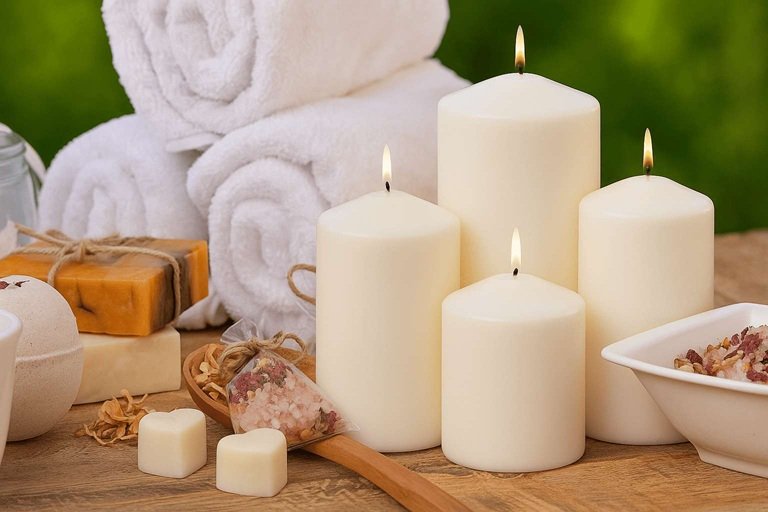
Handmade Candles • Natural Soy Wax • Aromatherapy • Mindful Living
The Craftsmanship Behind the Flame: Exploring the Making of Organic Soy Wax Artisan Candles
A candle may appear simple when it sits quietly on a table, but a truly handcrafted candle represents a remarkable combination of material knowledge, fragrance artistry, design, patience and careful finishing. From selecting the wax and wick to balancing fragrance, preparing the vessel, pouring the wax and allowing the finished candle to cure, every stage contributes to the final experience. This is the craftsmanship behind the flame.
In recent years, candles have evolved beyond basic sources of light. They have become part of home décor, self-care routines, meditation spaces, yoga practices, spiritual rituals, gifting and everyday relaxation. This growing interest has also encouraged consumers to look more closely at what goes into a candle. Instead of choosing solely by colour, packaging or fragrance name, many shoppers in India are exploring natural waxes, handmade production, vegan formulations, essential-oil-inspired fragrances and more considered approaches to candle making.
This is where organic soy wax artisan candles occupy an interesting place. They combine the visual appeal of decorative candles with the appeal of handcrafted production and the characteristics of soy wax. When thoughtfully made, a candle can become more than an object that burns: it can become a small ritual that helps define the atmosphere of a room.
What Makes an Artisan Candle Different?
The word “artisan” is often associated with products made in smaller quantities and with greater attention to individual details. In candle making, the distinction becomes especially meaningful because seemingly small decisions can influence how a candle looks, smells and burns.
A mass-produced candle may be designed around efficiency, consistency and large-scale manufacturing. Artisan candle making, by contrast, often places greater emphasis on the relationship between materials and the maker's process. Wax temperature, fragrance concentration, wick selection, vessel dimensions, curing time and finishing techniques all need to work together.
This does not mean that every handmade candle is automatically superior to every factory-made candle. Craftsmanship is demonstrated through formulation, testing, consistency, responsible sourcing and attention to detail. The real value of a handmade candle lies in the care taken to make the finished product perform as intended.
Handmade means paying attention to details
Consider a candle vessel. The container needs to accommodate the wax volume and wick system, withstand the heat produced during normal use and complement the visual identity of the candle. A maker must think about more than appearance.
The same applies to fragrance. A fragrance that smells beautiful in a bottle may behave differently when incorporated into wax. It may require testing at different concentrations. The hot scent released while the candle burns may also differ from the cold scent experienced before lighting.
This attention to the complete sensory experience is one reason consumers are increasingly interested in handmade aromatherapy jar candles, decorative soy candles, wellness candles and artisan pillar candles.
The appeal of intentional craftsmanship
Handmade candles can also create an emotional connection because they communicate a sense of intention. Instead of being viewed simply as disposable home accessories, they can become part of a personal environment.
Lighting a candle before reading, meditating, practising yoga or winding down after a long day can create a recognizable transition between activities. The candle does not have to perform a medical function to be meaningful. Its value may come from the atmosphere, fragrance, visual warmth and ritual associated with lighting it.
Why Soy Wax Matters in Artisan Candle Making
Soy wax has become one of the most recognizable plant-based waxes used in modern candle making. It is derived from soybean oil and is widely used for container candles, jar candles and selected pillar formulations.
For consumers searching for handmade organic soy wax candles in India, understanding the material is important. The phrase “soy candle” describes the wax base, but it does not automatically tell you everything about the finished product. A candle can contain soy wax while still differing substantially in fragrance, wick, additives, manufacturing method, vessel, finish and performance.
Soy wax and the handcrafted candle experience
Soy wax is particularly interesting for artisan candle makers because it can produce a smooth, creamy appearance and is well suited to many scented candle formats. Its characteristics also make it popular for candles designed around visual minimalism.
The appearance of a soy candle can become part of the product's personality. A natural-looking white or softly coloured wax can complement contemporary interiors, meditation rooms, yoga studios and wellness spaces.
What does “organic” mean?
Consumers should also distinguish between the terms “soy,” “natural,” “organic,” “vegan” and “non-toxic.” These words are not interchangeable.
Soy refers to the source of the wax. Vegan generally refers to the absence of animal-derived ingredients. Organic is a sourcing or certification-related claim that should be supported by appropriate evidence. Natural can have different meanings depending on the ingredient or product context. Therefore, shoppers should read product descriptions carefully and look for transparent information from the manufacturer.
A responsible candle brand should communicate its materials clearly rather than relying only on broad wellness language.
Why consumers choose plant-based wax candles
Interest in plant-based waxes is closely connected to the broader movement toward conscious consumption. Consumers are increasingly evaluating products based on ingredients, sourcing, design, longevity, packaging and perceived environmental impact.
This has contributed to demand for mistico opus soy wax candles, handmade soy wax candles, vegan scented jar candles in India and natural decorative pillar candles.
The Craftsmanship Behind the Flame: From Raw Material to Finished Candle
A beautifully finished candle is the result of a sequence of decisions. Although individual candle makers may use different techniques, the process generally involves several important stages.
1. Selecting the wax
The first decision is the wax system. For soy-based candles, the maker selects a suitable soy wax formulation according to the intended candle type.
Container candles and pillar candles do not necessarily require identical wax characteristics. A container candle needs to adhere appropriately to its vessel and melt in a predictable manner, while a pillar candle needs enough structural integrity to stand independently.
This is why soy wax jar candles for meditation and handmade soy wax pillar candles may require different formulations or testing approaches.
2. Preparing the vessel
In a jar candle, the vessel becomes part of both the engineering and design process. It must be clean, dry and appropriate for candle use.
The wick is positioned before or during the pouring process. Correct centring is important because wick position affects the way the candle melts.
3. Selecting and testing the wick
Wick selection is one of the most technically important aspects of candle making. The ideal wick depends on variables including wax type, vessel diameter, fragrance load and candle formulation.
A wick that is too small may struggle to create a suitable melt pool. A wick that is too large may produce excessive heat, soot or an overly large flame. Professional candle makers therefore test different wick sizes rather than choosing one simply because it looks right.
4. Creating the fragrance profile
Fragrance is where candle making becomes especially creative. The maker needs to consider the relationship between top, middle and base notes and how those notes interact with the wax.
A fragrance intended for a relaxing atmosphere might include botanical, floral, woody, citrus or soft aromatic notes. Lavender, for example, is frequently associated with calming bedtime rituals, while woody notes may create a warm and grounded ambience.
This explains the growing popularity of meditation candles with essential oils, natural lavender soy candles for sleep routines and essential-oil-inspired candles for spiritual rituals.
5. Heating the wax
Wax needs to be heated carefully so it can be properly combined with the fragrance and poured into the vessel. Temperature management matters because excessive or insufficient heat can influence appearance, fragrance distribution and the final finish.
Experienced candle makers pay attention to the manufacturer's specifications for the wax system they are using rather than assuming every soy wax behaves identically.
6. Adding fragrance
Fragrance is incorporated at an appropriate stage and temperature according to the specific wax and fragrance system. The objective is to achieve even distribution without compromising the characteristics of the finished candle.
This is one of the reasons artisan candle making involves much more than simply melting wax and adding perfume. The interaction between wax, fragrance and wick must be considered as a complete system.
7. Pouring the candle
The pouring stage demands patience and consistency. The maker pours the prepared wax into the prepared vessel while keeping the wick correctly positioned.
Small differences in pouring conditions can influence the surface appearance. Depending on the wax formulation and environment, soy wax can develop frosting, unevenness or other visual characteristics. These are part of the material's behaviour and may sometimes contribute to the authentic appearance associated with handmade candles.
8. Cooling and curing
A freshly poured candle is not necessarily ready for immediate use. Cooling allows the wax structure to stabilize, while curing can allow the fragrance and wax system to settle.
The appropriate curing period varies by formulation and manufacturer. This is an important distinction between a carefully developed artisan candle and a product treated as an immediately disposable commodity.
9. Finishing and inspection
The final stage includes trimming the wick, checking the surface, inspecting the vessel, reviewing the label and ensuring the candle meets the maker's quality standards.
Handmade production does not eliminate the need for quality control. In fact, careful quality control is what transforms craftsmanship into a repeatable product experience.
The Art of Fragrance: Why Scent Is Central to an Artisan Candle
A candle is both visual and olfactory. The flame provides movement and warmth while fragrance can influence how a room feels to the person experiencing it.
The popularity of toxin free scented candles with essential oils, organic essential oil jar candles and vegan soy wax aromatherapy candles reflects an increasing desire for more intentional fragrance experiences.
Cold throw and hot throw
Candle makers commonly distinguish between the scent perceived before lighting and the scent experienced while the candle is burning. These are often described as cold throw and hot throw.
A candle may smell excellent when unlit but produce a different impression when warmed. The maker therefore needs to evaluate both stages.
Essential oils and fragrance oils
Essential oils are concentrated aromatic extracts derived from plants, while fragrance oils are formulated aromatic compositions. Not every essential oil performs identically in candle wax, and not every fragrance is an essential oil.
Consumers looking for essential oil candles for spiritual rituals should therefore read ingredient information rather than assuming that every candle marketed as aromatherapy contains only essential oils.
Why fragrance balance matters
A sophisticated candle is rarely about maximum fragrance intensity. The goal is often balance. A fragrance that is too aggressive may overwhelm a small room, while a fragrance that is too subtle may disappear.
Artisan makers can therefore approach scent as a form of composition. Floral notes can soften a blend, citrus can add brightness, woods can provide depth and herbal notes can introduce a botanical character.
The Hidden Engineering of a Candle Wick
The wick may be the smallest visible component of a candle, but it plays a major role in the burning experience.
Wick selection is influenced by candle diameter, wax formulation, fragrance load, vessel material and other variables. A candle maker therefore needs to conduct burn testing to determine whether the chosen wick performs appropriately.
Why wick testing matters
Without testing, a candle may burn unevenly, create an excessively large flame, leave excessive wax on the sides or behave unpredictably.
Good craftsmanship means treating these issues as engineering questions rather than cosmetic problems.
Wick trimming
Consumers also play a role in candle performance. Before relighting a candle, the wick should generally be trimmed according to the manufacturer's recommendations. A properly maintained wick can help encourage a more controlled flame.
Pouring, Curing and Finishing: Where Patience Becomes Part of the Product
One of the most underappreciated parts of candle craftsmanship is waiting.
After the wax is poured, the maker cannot simply rush to packaging. The candle needs time to cool and, depending on the formulation, cure.
This slower process is part of what makes handmade production distinctive. In a culture where products are often optimized for speed, artisan candle making rewards patience.
The beauty of small variations
Handmade candles may display subtle variations in surface texture, colour or finish. These variations should not automatically be interpreted as defects. Natural wax systems can have their own visual characteristics.
At the same time, genuine craftsmanship requires knowing the difference between a natural characteristic and a quality problem. A professional maker tests and inspects candles rather than using “handmade” as an excuse for poor consistency.
Candles for Mindfulness Practice: Turning Lighting Into a Ritual
Candles have a long association with contemplative environments. Their gentle visual movement can provide a simple focal point, while the fragrance of a carefully selected candle can contribute to the sensory character of a room.
For people searching for candles for mindfulness practice, the most important consideration may not be fragrance strength. Instead, the candle should support a calm, uncluttered environment.
Creating a peaceful meditation space
A meditation space does not require expensive furniture or elaborate decoration. A comfortable seat, reduced visual clutter, suitable lighting and a quiet atmosphere may be enough.
A candle can become a symbolic beginning to the practice. Lighting it can mark the transition from ordinary activity to intentional stillness.
This makes candles for peaceful meditation spaces especially appealing to people who want their environment to communicate calm.
Candles for spiritual meditation
In many personal and cultural traditions, flame has symbolic associations with awareness, devotion, transformation and presence. A candle can therefore become part of a spiritual meditation ritual according to an individual's beliefs.
The important distinction is that a candle creates an environment; it should not be presented as a guaranteed spiritual or medical treatment.
Using scent mindfully
Scent can be incorporated into meditation as another sensory anchor. A person might select a soft floral, herbal or woody fragrance and use it consistently during a meditation routine.
Over time, the repeated association between the scent, the candle and the practice may help establish a recognizable ritual environment.
Aromatherapy Candles and the Sensory Atmosphere of Home
The term aromatherapy is widely used in candle marketing, wellness spaces and home-fragrance products. At its most useful level, it can describe an intentional approach to scent and atmosphere.
Consumers searching for organic aromatherapy candles for stress relief, aromatherapy candles for relaxation and sleep or calming aromatherapy candles for home are often looking for a sensory experience rather than simply a decorative object.
Creating a relaxing home atmosphere
A relaxing room is influenced by many factors: lighting, temperature, sound, colour, clutter, furniture and fragrance. Candles can contribute to the lighting and scent dimensions of that environment.
A warm candle glow can soften the visual atmosphere of a room, especially during evening hours. A balanced fragrance can add another layer to the experience.
Stress relief candles for home
It is better to think of candles as part of a relaxation routine rather than as a guaranteed treatment for stress or anxiety. A person might light a candle while taking a bath, reading, journalling, stretching or simply sitting quietly.
This ritualistic approach explains the popularity of stress relief candles for home, wellness candles and natural aromatherapy candles.
Essential oil candles for emotional balance
Fragrance can be closely linked with memory and personal associations. A familiar botanical scent may remind someone of a garden, a holiday, a spa or a particular season.
For that reason, essential oil candles for emotional balance can be understood as sensory tools for creating a preferred atmosphere rather than products that promise a specific psychological outcome.
How Natural Candles Can Help Create a Calming Home Environment
The modern home is expected to perform many functions. It may be a workplace, bedroom, entertainment space, dining room, yoga area and place for rest. Creating distinct sensory cues can help each space feel intentional.
Living room ambience
A soy wax jar candle can be used as a decorative accent on a coffee table, shelf or sideboard. A warm fragrance can complement evening routines without dominating the room.
Bedroom ambience
Some people prefer gentle botanical or floral fragrances in the evening. Lavender is particularly popular in bedtime rituals, which explains searches for lavender candles for better sleep and natural lavender soy candles for sleep.
However, a candle should always be extinguished before sleeping or leaving the room. A candle is never an appropriate unattended overnight light source.
Reading corners
A candle can transform an ordinary reading corner into a more deliberate ritual space. Pairing warm ambient light with a comfortable chair, soft textile and a subtle fragrance can create a distinctive evening environment.
Self-care spaces
Candles are also commonly used during baths, skincare routines, journalling and quiet reflection. A handmade candle can become the visual marker that begins a personal self-care ritual.
Natural Candles for Yoga Studios and Home Yoga Practice
Yoga spaces often benefit from a simple visual and sensory environment. Excessive decoration can distract from practice, while carefully chosen elements can reinforce a sense of intentionality.
This is one reason natural candles for yoga studios and natural essential oil candles for yoga are popular among wellness-focused consumers.
Choosing candles for yoga practice
For a yoga room, consider the size of the space, ventilation, fragrance intensity and the nature of the session. A strong scent may not be appropriate for every practitioner.
During gentle stretching, breathwork or restorative sessions, a subtle fragrance may fit the atmosphere better than an overpowering aroma.
Yoga and meditation candles
A candle can also provide a visual transition into practice. Lighting it before beginning may signal that phones, work and other distractions are being put aside.
For people who enjoy this approach, aromatherapy candles for yoga practice and candles for meditation and relaxation can become part of a consistent wellness routine.
Essential Oil Candles for Spiritual Rituals and Personal Reflection
Fire and flame have symbolic significance across many traditions. A candle may represent focus, remembrance, gratitude, intention or reflection.
Modern consumers may incorporate candles into personal rituals without following a formal religious practice. The ritual could be as simple as lighting a candle while journalling, reflecting on the day or setting an intention.
A candle as a ritual object
Ritual is fundamentally about repetition and meaning. When the same action is performed at the same time or in the same context, it can become psychologically recognizable.
Lighting an artisan candle can therefore mark a transition. The candle becomes associated with the moment rather than merely serving as a source of illumination.
Aromatherapy candles for chakra-inspired practices
Some wellness consumers search for aromatherapy candles for chakra healing. Such products may be incorporated into chakra-inspired meditation or personal spiritual practices.
It is important, however, to distinguish spiritual or traditional practices from scientifically established medical treatments. Candles can support the atmosphere of a ritual, but they should not be presented as a replacement for professional healthcare.
Handmade Soy Wax Pillar Candles: Sculpture, Structure and Function
Jar candles are only one category of artisan candle. Pillar candles offer another opportunity for craftsmanship because the wax itself becomes the visible structure of the object.
Natural soy pillar candles for meditation, organic aromatherapy pillar candles and vegan decorative pillar candles can combine sculptural design with fragrance and function.
Why pillar candles are visually distinctive
Unlike a jar candle, a pillar candle does not rely on a vessel to define its silhouette. Shape, proportion, texture and colour become part of the design.
This makes pillar candles especially interesting for modern interiors. A sculptural candle can be displayed even when it is not burning.
Decorative does not mean purely ornamental
A beautifully designed candle can function as décor while remaining a working candle. This dual role is one reason artisan pillar candles have become popular among consumers seeking objects that combine aesthetic and sensory value.
Handmade wellness pillar candles can therefore fit both decorative and ritual-oriented environments.
Handmade Organic Jar Candles in India
Jar candles are particularly practical for modern homes because the vessel provides structural support and can make the candle easier to position on a table or shelf.
Searches for handmade organic jar candles India, organic wellness jar candles and soy wax jar candles for relaxation reflect the growing overlap between home décor and personal wellness.
Why jar candles work well for gifting
A beautifully packaged jar candle is naturally suited to gifting. It can communicate ideas of comfort, relaxation, celebration and self-care without requiring the recipient to know their exact clothing size, décor preferences or personal measurements.
Artisan candles can be especially appealing as gifts because the handmade story gives the product an additional layer of meaning.
Choosing the right size
Larger candles can be useful as statement pieces, while smaller candles may suit bedrooms, desks, bathrooms or gifting sets. The correct size depends on the room, intended burn time and desired visual impact.
Handmade Vegan Soy Candles With Essential Oils
Vegan candles appeal to consumers who prefer products formulated without animal-derived ingredients. Soy wax is naturally plant-derived, although the complete formulation still needs to be checked when making a vegan claim.
Consumers interested in handmade vegan soy candles with essential oils should examine the manufacturer's ingredient information and product description.
Vegan and handcrafted can complement each other
The combination of plant-based wax and handmade production reflects a broader consumer interest in conscious purchasing.
The appeal is not simply about a label. It is about understanding what the product contains, why those materials were selected and how the final candle was produced.
This philosophy fits naturally with the growing market for mistico opus handmade vegan candles and vegan soy wax aromatherapy candles.
Why Artisan Soy Candles Can Feel Like a Form of Affordable Luxury
Luxury is not necessarily about extravagance. Increasingly, it can mean craftsmanship, attention to detail and sensory quality.
A candle occupies an unusual position in the luxury market. It is comparatively accessible, yet it can change the atmosphere of an entire room.
Luxury through craftsmanship
Mistico Opus luxury soy candles can be understood within this broader trend toward sensory home products that combine fragrance, design and handcrafted character.
The luxury experience is strengthened when a product tells a coherent story: thoughtfully selected materials, carefully developed fragrance, attractive presentation and attention to finishing.
Luxury without excess
Modern conscious luxury increasingly favours fewer, better-considered objects. Instead of filling a room with decorative items, consumers may choose one or two pieces that create a strong sensory impression.
A beautifully designed artisan candle can perform exactly this role.
Mistico Opus: Bringing Handmade Soy Wax Candle Craftsmanship Into the Home
The philosophy behind artisan candles becomes especially relevant when exploring brands that position candle making around craftsmanship, natural wax and wellness-oriented experiences.
Mistico Opus is a brand associated with handmade soy wax candles, aromatherapy, wellness and mindful living. Its range can be explored through the Mistico Opus website.
For shoppers searching for mistico opus aromatherapy candles, mistico opus eco friendly candles, mistico opus essential oil candles or mistico opus meditation candles, the brand provides a useful example of how candle products can be positioned around sensory experience rather than illumination alone.
Mistico Opus natural aromatherapy candles
The growing interest in mistico opus natural aromatherapy candles reflects a larger consumer movement toward home fragrance products associated with intentional living.
A natural-looking candle can complement spaces designed around meditation, yoga, relaxation and quiet reflection.
Mistico Opus organic scented candles
Consumers looking for mistico opus organic scented candles should always review the current product descriptions for precise ingredient and formulation information. Product ranges can change, and claims such as organic, vegan or essential-oil-based should be understood according to the specific product.
Mistico Opus wellness candles
Wellness is increasingly expressed through small daily rituals. A candle may become part of a morning meditation, evening wind-down, yoga session, journalling practice or home spa routine.
In this context, mistico opus wellness candles represent the intersection between fragrance, home décor and intentional living.
Mistico Opus meditation candles
Meditation candles can be selected according to fragrance, size, design and personal preference. For someone building a dedicated meditation corner, the combination of soft illumination and subtle fragrance can help create a consistent environment.
Those interested in mistico opus meditation candles can explore the current collection directly on the brand's website before choosing a product appropriate to their space and routine.
Why Handmade Candles Feel More Meaningful
The emotional appeal of handmade products comes partly from the knowledge that a human being has been involved in creating them.
In an increasingly digital world, physical objects with visible craftsmanship can feel reassuringly tangible. The slight variation of a handmade candle, the texture of natural wax and the story behind its creation can all contribute to this feeling.
The human story behind the object
When consumers understand how a candle is made, the finished object becomes easier to appreciate. What appears to be a simple jar of wax is actually the result of material selection, formulation, testing, fragrance development, pouring, curing, finishing and packaging.
This is the craftsmanship behind the flame.
Small rituals have large emotional value
Lighting a candle takes only a few seconds. Yet repeated actions can become meaningful parts of daily life.
The candle may signal the start of meditation, the end of a workday or the beginning of a quiet evening. The object remains simple, but the ritual gives it significance.
How to Choose the Best Organic Soy Wax Artisan Candle
With so many candle products available online and in stores, choosing a high-quality artisan candle requires more than selecting the most attractive label.
1. Check the wax type
Look for clear information about the wax used. If the product is marketed as soy wax, the product description should clearly identify the wax formulation.
2. Understand the fragrance
Determine whether the fragrance uses essential oils, fragrance oils or a blend. Do not assume that terms such as “aromatherapy” automatically mean the candle contains only essential oils.
3. Look for transparent product information
A trustworthy product page should provide useful information about candle size, burn instructions, materials and safety.
4. Consider the room
A fragrance suitable for a large living room may feel too strong in a small bedroom. Choose the candle according to room size and personal scent sensitivity.
5. Think about the purpose
Are you buying the candle for décor, meditation, yoga, gifting, relaxation or everyday ambience? The answer can guide the choice of fragrance, format and size.
6. Examine the vessel
For jar candles, consider the vessel's appearance and practicality. A reusable or attractive container can extend the product's usefulness after the candle has been consumed, subject to appropriate cleaning and reuse suitability.
7. Consider craftsmanship
Look for evidence that the maker cares about wick selection, burn testing, fragrance development and finishing.
8. Avoid exaggerated promises
Be cautious of candles marketed as guaranteed cures for anxiety, insomnia, medical conditions or other health problems. A well-made candle can contribute to a pleasant environment without making unsupported medical claims.
Lavender Candles, Evening Rituals and Better Sleep Habits
Lavender is one of the most recognizable scents associated with evening relaxation. This explains the popularity of searches for lavender candles for better sleep.
A candle can become part of a broader bedtime routine that includes dimming lights, reducing screen use, reading, stretching and preparing the bedroom for sleep.
The candle itself should not be treated as a sleep treatment. More importantly, it should never be left burning while someone falls asleep.
A safer evening candle ritual
- Choose a stable, heat-resistant surface.
- Keep the candle away from curtains, bedding and other combustible materials.
- Light the candle while remaining awake and present.
- Enjoy the ambience during your evening routine.
- Extinguish the candle before leaving the room or going to sleep.
Natural Wellness Candles for Meditation and Everyday Living
Wellness does not always require complicated routines. Small environmental changes can make everyday rituals feel more intentional.
Natural wellness candles for meditation can be used to establish a visual cue for quiet time. Similarly, organic wellness jar candles can become part of an evening home ritual.
The strongest candle rituals are usually sustainable because they are simple. If lighting a particular fragrance makes you want to sit quietly for ten minutes, journal or practise breathing, the candle has served a useful role in your routine.
Candles for Meditation and Relaxation: Designing a Sensory Ritual
A relaxation ritual can involve several senses simultaneously. Visual warmth comes from the flame. Fragrance contributes an olfactory dimension. Music or silence influences hearing. Comfortable textiles influence touch.
Candles for meditation and relaxation can therefore function as one component of a broader sensory environment.
A five-minute candle ritual
- Choose a quiet and safe location.
- Light the candle.
- Take several slow, comfortable breaths.
- Observe the flame without forcing concentration.
- Allow yourself a few minutes of quiet attention.
- Extinguish the candle safely when finished.
This is not a medical treatment. It is simply a practical way to introduce a deliberate pause into a busy day.
Eco-Friendly Soy Candles and More Conscious Consumption
Environmental considerations are increasingly important when consumers choose home fragrance products. Soy wax is plant-derived, which contributes to its popularity among shoppers interested in alternatives to traditional petroleum-derived waxes.
However, the environmental profile of a candle involves more than wax. Packaging, vessel production, fragrance ingredients, transportation, manufacturing practices and end-of-life considerations also matter.
What to consider beyond the wax
- Wax sourcing and formulation
- Fragrance ingredients
- Vessel material
- Packaging quantity
- Packaging recyclability or reuse
- Manufacturing practices
- Product durability and burn performance
Therefore, eco friendly soy candles for meditation should be evaluated as complete products rather than judged solely by the presence of soy wax.
Why Handmade Soy Wax Candles Are Becoming Relevant for Indian Homes
India's home-fragrance market reflects a fascinating blend of traditional rituals and modern lifestyle preferences. Candles can fit into festive décor, gifting, meditation, yoga, spiritual practices, bedrooms, living rooms and contemporary interior design.
The search interest surrounding handmade organic jar candles India, vegan scented jar candles India and organic scented pillar candles reflects this convergence.
Indian homes and sensory living
Fragrance has always played an important role in Indian cultural life. Modern candle makers can reinterpret this appreciation for fragrance through contemporary vessels, botanical profiles and minimalist designs.
Gifting in India
Candles are also well suited to gifting occasions such as birthdays, housewarmings, weddings, festive celebrations, corporate gifting and personal milestones.
Handmade candles add an additional story to the gift because the recipient receives not just fragrance but an object associated with craftsmanship.
Candle Safety: An Essential Part of Responsible Craftsmanship
No discussion of artisan candle making is complete without candle safety. A candle contains an open flame and must always be treated as a fire-risk product.
- Never leave a burning candle unattended.
- Keep candles away from curtains, paper, bedding and other combustible materials.
- Keep candles away from children and pets.
- Place candles on stable, heat-resistant surfaces.
- Do not move a candle while the wax is liquid.
- Follow the manufacturer's recommended burn instructions.
- Trim the wick according to the manufacturer's guidance before relighting.
- Stop using a candle when the remaining wax reaches the manufacturer's recommended limit.
- Extinguish candles before leaving a room or going to sleep.
Good craftsmanship and responsible consumer use work together. Even the best-designed candle needs to be burned correctly.
How to Get a Better Experience From Your Soy Wax Candle
Allow the first burn to establish an appropriate melt pool
The first burn is important because the candle begins developing its melt pattern. Follow the specific manufacturer's instructions rather than relying on a universal burn-time rule.
Keep the wick maintained
A properly maintained wick can contribute to a more controlled flame. Trim according to the instructions supplied with the candle.
Do not burn for excessive periods
Longer is not automatically better. Follow the product's recommended maximum burn duration.
Protect the candle between uses
Keep the candle covered when appropriate and store it away from excessive heat and direct sunlight. This can help preserve the appearance and fragrance.
Use the candle intentionally
Instead of burning a candle continuously, consider using it for specific moments: meditation, yoga, reading, evening relaxation, dinner or quiet reflection.
What Are You Really Buying When You Buy an Artisan Candle?
The price of an artisan candle reflects more than its wax weight. Consumers are also paying for formulation, testing, labour, fragrance development, vessel selection, packaging, quality control and design.
When comparing a handmade candle with a mass-produced alternative, the more useful question is not simply “Which one is cheaper?” It is “What experience and craftsmanship am I receiving?”
Material value
The wax, fragrance, wick and vessel are the physical components of the product.
Craft value
The maker's expertise transforms those materials into a functional candle.
Design value
Shape, colour, vessel, label and packaging determine how the candle integrates into a room.
Experience value
Finally, there is the intangible experience: the atmosphere created when the candle is lit.
The Future of Artisan Candle Making
The future of candle making is likely to be shaped by a combination of traditional craftsmanship and increasingly informed consumers.
Buyers want to understand ingredients. They care about aesthetics. They are interested in wellness. They increasingly question excessive packaging and want products that fit their personal values.
At the same time, artisan makers have access to better wax formulations, improved wick technology, more sophisticated fragrance development and increasingly creative vessel design.
The result is a candle category that is no longer defined simply by illumination. The modern artisan candle can be a piece of décor, a fragrance object, a gifting product, a meditation companion and a small daily ritual.
The Flame Is Only the Beginning
A candle begins long before the match is struck.
It begins with the selection of wax. It continues through wick testing, fragrance development, temperature control, careful pouring, cooling, curing, finishing and inspection. Every stage contributes to the final moment when the flame appears.
This is what makes the craftsmanship behind the flame so fascinating. A handmade candle is a meeting point between material science and creative expression.
For consumers seeking organic soy wax artisan candles, the appeal is therefore not simply that soy wax is plant-derived or that the candle looks beautiful. The deeper appeal lies in the possibility of owning an object made with intention.
Whether used as candles for mindfulness practice, candles for a peaceful meditation space, natural candles for a yoga studio, aromatherapy candles for a relaxing home atmosphere or simply as beautiful home décor, an artisan candle can transform an ordinary moment into a more deliberate one.
Brands such as Mistico Opus illustrate how modern candle collections can bring together soy wax, handcrafted production, fragrance, wellness-inspired design and contemporary Indian home aesthetics. To explore the brand's current collection, visit Mistico Opus.
Ultimately, the most meaningful candle is not necessarily the largest, brightest or most expensive. It is the one that fits naturally into your life and creates a moment worth slowing down for.
The flame may last for an hour. The ritual you create around it can last much longer.
Frequently Asked Questions About Organic Soy Wax Artisan Candles
Below are answers to common questions about handmade soy wax candles, aromatherapy candles, meditation candles, vegan candles and artisan candle craftsmanship.
1. What are organic soy wax artisan candles?
Organic soy wax artisan candles are handcrafted candles made using soy-based wax and, depending on the specific product, fragrances or essential oils and other carefully selected ingredients. The term artisan emphasizes small-batch craftsmanship, formulation, testing, finishing and attention to detail. Consumers should check individual product descriptions for verified organic, vegan and ingredient claims.
2. Are soy wax candles good for meditation?
Soy wax candles can be well suited to meditation spaces because they can provide soft illumination and a fragrance-based sensory atmosphere. A candle can also become a consistent ritual cue for beginning a meditation session. Choose a fragrance you personally find comfortable and always burn the candle safely.
3. What are the best candles for mindfulness practice?
The best candles for mindfulness practice are usually those with a comfortable fragrance, appropriate size, stable vessel and reliable burn performance. Soft floral, herbal, woody and botanical scents are popular choices, but personal preference is the most important factor.
4. Are handmade soy candles better than mass-produced candles?
Handmade does not automatically mean better, but artisan candles can offer greater emphasis on small-batch formulation, fragrance development, wick testing and finishing. The quality depends on the maker's materials, testing procedures, craftsmanship and transparency.
5. What is the difference between soy wax candles and paraffin candles?
Soy wax is derived from soybean oil, while conventional paraffin wax is derived from petroleum refining. They also have different physical characteristics and may require different wick and formulation approaches. Consumers should compare the complete candle formulation rather than considering wax type alone.
6. Are soy wax candles vegan?
Soy wax itself is plant-derived, but a candle should only be described as vegan when the complete formulation and manufacturing process meet the relevant vegan requirements. Check the manufacturer's product information before purchasing.
7. Can I use essential oil candles for meditation?
Yes, candles formulated with suitable essential oils can be used as part of a meditation environment. However, essential oils vary in their candle performance, and not every essential oil is suitable for every wax system. Follow the manufacturer's instructions and choose a fragrance that is comfortable for you.
8. Are lavender candles good for sleep?
Lavender fragrance is commonly used in evening relaxation routines and is popular in bedtime-oriented candles. A lavender candle can be incorporated into a relaxing bedtime ritual, but it should not be considered a guaranteed treatment for insomnia or other sleep disorders. Never leave a candle burning while sleeping.
9. What are aromatherapy candles used for?
Aromatherapy candles are generally used to create a pleasant scented atmosphere. People may use them during relaxation, meditation, yoga, bathing, reading, journalling or evening routines. They should be viewed as sensory and ambience products rather than substitutes for medical treatment.
10. What makes a candle artisan or handmade?
An artisan or handmade candle is generally produced with significant human involvement in formulation, preparation, pouring, finishing or quality control, often in smaller batches. The exact meaning of “handmade” can vary, so consumers should look for transparent information about how the candle is actually produced.
11. How are handmade soy wax candles made?
Handmade soy wax candles are typically produced by preparing the vessel and wick, melting the soy wax, incorporating fragrance according to the formulation, pouring the wax into the vessel, allowing it to cool and cure, and then inspecting and finishing the candle. Wick selection and burn testing are important parts of professional candle making.
12. What are the best candles for a peaceful meditation space?
The best candles for a peaceful meditation space are those with a fragrance you find calming, a manageable size and reliable burn characteristics. Soy wax jar candles and carefully designed pillar candles can both work well. Keep the space uncluttered and always observe candle safety precautions.
13. Are soy wax candles suitable for yoga practice?
Soy wax candles can be used in yoga spaces when the room is appropriately ventilated and the candle is positioned safely away from mats, clothing, curtains and other combustible materials. For group classes, consider whether all participants are comfortable with the chosen fragrance.
14. What should I look for when buying handmade organic candles in India?
Look for clear information about wax type, fragrance, ingredients, candle size, burn instructions, safety guidance and manufacturing claims. If a brand describes a candle as organic, vegan or essential-oil-based, check the product-specific information supporting that description.
15. Where can I find Mistico Opus soy wax and aromatherapy candles?
Mistico Opus offers a range of candle products associated with soy wax, aromatherapy, wellness and handcrafted candle experiences. Visit the official Mistico Opus website to explore the current collection, product specifications and availability.