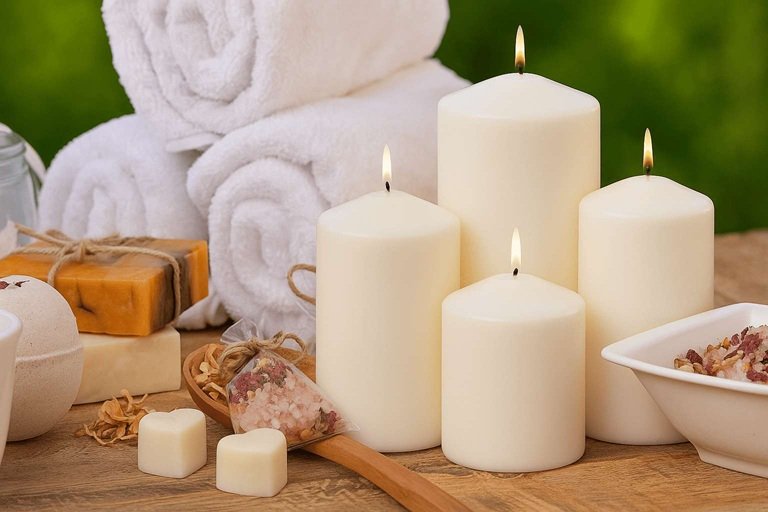
Mindful Living • Aromatherapy • Conscious Home • Meditation
The Philosophy of Mindful Living: How Handmade Aromatherapy Candles Connect Nature, Simplicity, and Awareness
Mindful living is not about escaping everyday life. It is about learning to experience ordinary moments with greater attention, intention, and appreciation. A handmade aromatherapy candle can become a small but meaningful part of that philosophy. When natural wax, botanical-inspired fragrance, warm candlelight, craftsmanship, and conscious ritual come together, a simple candle can help transform an everyday room into a more intentional space for meditation, yoga, reflection, relaxation, and presence.
In a world filled with notifications, deadlines, multitasking, artificial light, and constant stimulation, the philosophy of mindful living invites us to slow down and notice what is already around us. The glow of a flame, the gentle character of a natural fragrance, the texture of handmade wax, and the quiet ritual of lighting a candle can all become reminders to pause.
This is where candles for mindfulness practice can have a place in a conscious lifestyle. They are not a replacement for meditation, yoga, sleep routines, professional care, or other wellness practices. Instead, they can serve as sensory cues that help establish an atmosphere in which those practices feel intentional.
For people in India who are exploring conscious consumption, meditation, yoga, spiritual reflection, sustainable home décor, and natural wellness, handmade vegan soy candles with essential oils offer an appealing connection between nature and modern living.
What Is the Philosophy of Mindful Living?
Mindful living is the practice of bringing deliberate attention to everyday experiences. Rather than moving automatically from one task to another, mindfulness encourages us to notice the present moment: what we see, hear, smell, feel, think, and experience.
The philosophy is beautifully simple. Instead of constantly asking, “What comes next?”, mindful living creates space for the question, “What is happening right now?”
This shift can influence many parts of daily life. It can affect how we eat, work, exercise, meditate, decorate our homes, interact with others, rest, and choose the products we bring into our living spaces.
A mindful lifestyle does not require a perfect home, an expensive meditation room, or a complicated morning routine. Often, it begins with small decisions. Putting the phone away for ten minutes is mindful. Drinking tea without scrolling is mindful. Walking without constantly checking notifications is mindful. Sitting quietly beside a candle and observing its glow can also become mindful.
Mindfulness Is About Attention, Not Perfection
One common misconception is that mindfulness requires complete mental silence. It does not. Thoughts may continue to appear. Sounds may continue around you. You may become distracted. The practice is simply to notice and gently return attention to the present experience.
This is one reason candles for mindfulness practice can be useful as a ritual object. The candle does not need to “make” someone mindful. Instead, lighting it can become a repeated signal: this is the moment when I slow down.
Over time, that association can make the candle part of a personal ritual. The physical act of lighting it becomes a transition between activity and awareness.
Mindful Living Is an Everyday Philosophy
Mindful living does not have to be reserved for formal meditation. You can practice awareness while cooking, cleaning, journaling, stretching, reading, walking, or preparing for sleep.
The important idea is intentionality. Instead of treating the environment as background noise, mindful living encourages us to notice how our surroundings influence our attention.
A carefully selected candle can therefore become more than decoration. It can represent a deliberate choice to create an atmosphere that supports quiet attention.
Why Do Candles Fit Into Mindful Living?
Candles naturally invite attention because they engage several senses simultaneously. We see the flame. We may notice fragrance. We feel the atmosphere of warm, low light. We hear the subtle environment around us. Even the act of lighting the wick creates a beginning.
These sensory details can make a candle particularly appropriate for candles for meditation and relaxation.
The key is not the candle alone. It is the relationship between the candle and the practice.
The Candle as a Ritual Marker
Rituals create psychological boundaries between different parts of the day. Lighting a candle after work can symbolize the transition from productivity to rest. Lighting one before meditation can signal the beginning of a practice. Lighting a candle before journaling can establish a quiet atmosphere for reflection.
In this way, a candle becomes a physical marker of intention.
The Candle as a Visual Anchor
A steady flame can provide a simple visual object for attention. Some meditation traditions use candle gazing as a concentration practice. Others may simply use candlelight to create a peaceful atmosphere.
If you use a candle for meditation, the goal does not have to be staring intensely at the flame. You can simply notice its movement, brightness, shape, and changing patterns while returning your attention to the breath.
The Candle as a Sensory Reminder
Fragrance can also become an anchor. When a familiar scent is repeatedly associated with quiet reflection, noticing that scent may remind you to slow down.
This is why meditation candles with essential oils can become part of a personal mindfulness ritual.
The Connection Between Nature and Conscious Living
Mindful living naturally creates an appreciation for the natural world. When people become more attentive, they often begin noticing details that busy routines previously concealed: sunlight entering a room, the sound of rain, the texture of wood, the fragrance of herbs, the changing colors of plants, or the warmth of natural materials.
Candles made with plant-derived wax can fit naturally into this aesthetic of conscious living.
Bringing Natural Inspiration Indoors
A home can contain many artificial stimuli. Screens glow. Appliances hum. Synthetic materials dominate surfaces. Bright overhead lighting can keep the mind in an active mode even when the day is ending.
Introducing natural textures, plants, wood, cotton, stone, soft lighting, and carefully selected fragrances can create a more grounded environment.
Eco friendly soy candles for meditation are particularly relevant to this approach because soy wax is plant-derived and renewable in origin. Consumers should still evaluate the complete product, including fragrance ingredients, wick, packaging, sourcing, and manufacturing practices, rather than assuming that every candle marketed as “natural” has identical environmental characteristics.
Nature Does Not Have to Mean Rustic
Conscious living does not require abandoning elegance. A mindful home can be contemporary, luxurious, minimalist, traditional, or eclectic.
This is one reason luxury soy candles can appeal to people who want sustainability-inspired choices without sacrificing visual sophistication.
The philosophy is not “own nothing.” It is “choose intentionally.”
From Natural Material to Natural Attention
A natural material can also become a reminder of natural processes. Soy wax originates from a plant source. Essential oils are associated with botanical materials. A flame represents a basic element of transformation.
When experienced mindfully, these details can encourage a greater appreciation for the relationship between human life and the natural world.
Why Simplicity Matters in a Mindful Home
Mindful living and minimalism are not identical, but they share an important principle: unnecessary stimulation can make attention more difficult.
A room crowded with objects, colors, sounds, notifications, and competing scents can feel visually and mentally busy. A simpler environment can make it easier to identify what deserves attention.
The Power of One Candle
You do not need ten candles to create a mindful atmosphere. In many cases, one well-chosen candle is enough.
A single candle on a clean table can create a visual centre. The flame becomes noticeable without overwhelming the room.
This is especially useful for people beginning a meditation practice. Too many sensory elements can become distractions.
Simplicity in Fragrance
Fragrance selection should also be intentional. Strong scent is not automatically better. A fragrance that is pleasant and appropriate for the room can be more useful than an overpowering aroma.
For a peaceful meditation space, consider a scent profile that feels comfortable and unobtrusive. Lavender-inspired aromas may suit evening routines. Woodsy aromas may suit grounding practices. Citrus profiles may feel brighter during daytime routines.
Individual responses to fragrance vary, so the best scent is ultimately the one that feels pleasant and appropriate to you.
Mindful Consumption
Simplicity also influences purchasing decisions. Instead of collecting candles because they are fashionable, consider asking:
- What purpose will this candle serve?
- Do I enjoy its fragrance?
- Are its materials clearly described?
- Is its container reusable or recyclable where possible?
- Does the product fit my lifestyle?
- Does the purchase support the kind of craftsmanship I value?
These questions turn shopping into an exercise in awareness.
Candlelight as a Cue for Awareness
Awareness is at the centre of mindfulness. It means noticing the present experience rather than operating entirely on autopilot.
Candlelight can become a useful environmental cue because it is naturally dynamic. The flame moves. Shadows shift. Light changes subtly. Unlike a static lamp, a flame provides a small amount of visual movement that can invite observation.
A One-Minute Candle Awareness Exercise
Sit comfortably near a safely positioned candle. Take one slow breath. Look at the general shape of the flame without forcing your eyes to focus intensely.
Notice:
- The brightness of the flame.
- The movement of the flame.
- The light falling on nearby surfaces.
- The fragrance in the room, if any.
- The temperature and physical sensation of the room.
- The natural rhythm of your breathing.
When your mind wanders, simply notice that it wandered and return to one sensory detail.
This simple practice illustrates the philosophy behind candles for mindfulness practice: the object is not the destination. Attention is.
Awareness Beyond the Candle
After a few minutes, extinguish the candle carefully and carry the same awareness into another activity. Drink water slowly. Wash your hands consciously. Notice your surroundings while walking.
That is where mindful living becomes powerful. The candle is simply the beginning.
Why Soy Wax Appeals to Conscious Consumers
Soy wax has become popular among consumers looking for plant-derived alternatives in home fragrance. Soy wax is made from soybean oil and is widely used in candles because of its characteristics as a candle wax.
For consumers searching for mistico opus soy wax candles, soy wax jar candles for meditation, or soy wax meditation pillar candles, the material itself is an important part of the purchasing decision.
Soy Wax and the Idea of Conscious Choice
Conscious consumption is about understanding what we purchase rather than buying automatically. Soy wax can appeal to people who prefer plant-derived materials and are interested in renewable-source ingredients.
However, “soy wax” alone does not tell the entire environmental story. Packaging, transportation, agricultural practices, fragrance materials, production methods, wick construction, and end-of-life disposal all matter.
A genuinely conscious candle purchase therefore considers the whole product rather than relying on one label.
Soy Wax for Meditation and Home Ambience
Soy wax candles can work well as ambience products because their warm glow complements quiet spaces. Jar formats are particularly convenient for creating a defined candle area, while pillar formats can create a more sculptural visual presence.
Whether you choose a jar or pillar candle, the mindful approach remains the same: select the product according to the atmosphere and ritual you want to create.
The Meaning of Handmade Candle Craftsmanship
Handmade products have a special relationship with mindful living because they make craftsmanship visible.
A handmade candle represents more than a finished object. It reflects a process involving material selection, preparation, pouring, setting, finishing, inspection, packaging, and presentation.
Why Handmade Matters to Conscious Consumers
Handmade production can create a stronger sense of connection between maker and customer. It can also encourage consumers to think about how products are made.
This does not mean that every handmade product is automatically superior. Quality depends on formulation, craftsmanship, testing, consistency, safety practices, and responsible sourcing.
Nevertheless, handmade candle culture aligns naturally with the idea of slowing down and appreciating the work behind everyday objects.
Handmade Organic Jar Candles in India
The growing interest in handmade organic jar candles India reflects a broader desire for products that feel personal, aesthetic, and connected to conscious lifestyles.
A handmade candle can become part of a home ritual rather than simply another decorative purchase.
Handmade Soy Wax Pillar Candles
Handmade soy wax pillar candles can be particularly attractive for meditation corners, yoga spaces, festive décor, prayer rooms, reading areas, and intentional home styling.
Their physical form makes them both functional and decorative, allowing the candle itself to contribute to the visual language of a mindful room.
Essential Oils, Fragrance and Sensory Awareness
Fragrance has an important role in how we experience a space. A familiar aroma can evoke memories, establish associations, or simply make an environment feel more pleasant.
This makes essential oil candles for spiritual rituals, meditation candles with essential oils, and handmade vegan soy candles with essential oils relevant to sensory-focused mindfulness.
Why Fragrance Can Influence the Atmosphere
Smell is closely connected with memory and emotion. A particular botanical aroma may remind someone of a garden, a spa, a forest, a traditional ritual, or a peaceful evening.
Because fragrance responses are personal, there is no single “best” essential oil candle for everyone.
Lavender for an Evening Atmosphere
Lavender is widely associated with relaxation and bedtime routines. People searching for natural lavender soy candles for sleep or lavender candles for better sleep may appreciate lavender as part of an evening atmosphere.
A candle should not be treated as a medical treatment for insomnia or another sleep disorder. Instead, a lavender-scented candle can be incorporated into a broader wind-down routine involving dim lighting, reduced screen exposure, comfortable surroundings, and consistent sleep habits.
Woody Aromas for Grounding Rituals
Woody scent profiles such as sandalwood-inspired aromas are often associated with meditation, contemplation, and spiritual spaces.
For people interested in candles for spiritual meditation, a grounding scent can become part of an intentional ritual.
Citrus Aromas for Daytime Practices
Citrus fragrance profiles can feel bright and energising. They may be appropriate for morning meditation, creative work, yoga, or a daytime reset.
Choosing Fragrance by Personal Association
Mindfulness means paying attention to your own experience. If one fragrance makes you feel uncomfortable or distracted, it is not the right mindfulness scent for you, regardless of how popular it is.
Using Candles for Meditation and Mindfulness
Meditation does not require candles. You can meditate anywhere, with or without props. However, candles can help some people establish a consistent ritual and create a calm sensory environment.
Creating a Peaceful Meditation Space
Start by choosing a quiet location. Remove unnecessary clutter. Turn off notifications. Adjust the lighting. Place your candle on a stable, heat-resistant surface away from curtains, papers, fabrics, children, pets, and other combustible materials.
This creates the foundation for candles for peaceful meditation space.
A Simple Ten-Minute Candle Meditation
- Choose a comfortable seated position.
- Place the candle at a safe distance.
- Light the candle intentionally.
- Take three slow breaths.
- Notice the flame without forcing concentration.
- Bring attention to your breathing.
- Notice the fragrance if the candle is scented.
- When thoughts arise, acknowledge them without judgment.
- Return attention to the breath or flame.
- End by extinguishing the candle safely and noticing how you feel.
The practice can last five minutes or thirty minutes. Consistency matters more than duration.
Candle Gazing and Concentration
Candle-gazing practices are found in yogic and contemplative traditions. If you explore candle gazing, avoid staring uncomfortably at the flame. Blink naturally and stop if your eyes become strained.
The broader purpose is attentive observation, not physical endurance.
Candles for Spiritual Meditation and Rituals
Across cultures, light has symbolic associations with clarity, hope, remembrance, devotion, renewal, and sacred presence. Candles can therefore become meaningful elements in spiritual environments.
Candles for spiritual meditation can be used as symbols rather than objects of worship. Their meaning depends on the tradition and personal intention of the practitioner.
Using a Candle to Set an Intention
Before lighting a candle, silently choose one intention:
- Presence
- Gratitude
- Compassion
- Patience
- Clarity
- Reflection
- Rest
- Renewal
The intention can be simple. You do not need an elaborate ceremony.
Essential Oil Candles for Spiritual Rituals
Fragrance can add another sensory layer to a spiritual ritual. Essential oil candles for spiritual rituals can be selected according to personal associations, cultural traditions, or simply the atmosphere you want.
It is useful to distinguish personal spiritual symbolism from scientific claims. A fragrance can support the atmosphere of a ritual without being described as a guaranteed mechanism for “healing” a chakra or curing an emotional condition.
A Candle and Gratitude Ritual
Light a candle safely. Sit quietly for several minutes. Think of three things you appreciate. Instead of rushing to the next task, allow yourself to experience each thought.
This turns an ordinary candle into a reminder of gratitude.
Using Natural Candles During Yoga Practice
Yoga is often associated with mindful movement, breath awareness, concentration, and relaxation. The environment in which yoga is practiced can influence how the session feels.
Natural candles for yoga studio spaces can contribute to a warm visual atmosphere, while natural essential oil candles for yoga may add fragrance when used appropriately.
Using Candles Before Yoga
A candle can mark the beginning of a yoga session. Light it before placing your mat, silence your phone, and take a few moments to establish your intention.
Using Candles During Gentle Yoga
For slower forms of yoga, candlelight can create a softer atmosphere. Place the candle well away from your movement path.
Avoid placing candles where they could be knocked over during standing poses, transitions, inversions, or dynamic movement.
Using Candles After Yoga
The post-practice period can be especially suitable for candlelight. After completing your poses, remain seated for a few quiet minutes and observe your breathing.
This is where aromatherapy candles for yoga practice can become part of a complete mindful ritual rather than merely decorative accessories.
Creating a Mindful Home Atmosphere
Your home does not need to look like a meditation retreat to feel peaceful. Mindfulness can begin with one corner, one surface, or one evening ritual.
Create a Dedicated Mindfulness Corner
Choose a small area with minimal clutter. Add a cushion, plant, journal, meditation mat, or other meaningful object. Place your candle in a safe position.
This can become a visual reminder to pause.
Use Warm Lighting
Bright overhead lighting can feel energetic and functional. Candlelight creates a warmer and more intimate atmosphere.
This makes calming aromatherapy candles for home useful for evening rituals, reading, quiet conversations, journaling, and meditation.
Reduce Sensory Competition
Do not combine multiple strong fragrances simply because they are available. One carefully selected aroma may create a more coherent experience.
Mindfulness is often less about adding more and more and more about removing distractions.
Choose Candles That Fit Your Interior
A candle can be both functional and decorative. Neutral jars can suit minimalist interiors. Sculptural pillars can add visual interest. Elegant vessels can complement luxury interiors.
This is one reason vegan decorative pillar candles and organic scented pillar candles can work well in conscious home styling.
Candles, Relaxation and Everyday Stress
Modern life can be demanding. Work, commuting, digital communication, family responsibilities, financial concerns, and information overload can make it difficult to transition into rest.
A candle cannot solve the causes of stress. However, a calming ritual can help create a deliberate transition from a busy period into a quieter one.
The Five-Minute Pause
Light a candle safely after completing your workday. Sit without your phone for five minutes. Take slow breaths. Notice the room. Let your attention settle.
This simple ritual may be more valuable than buying a complicated collection of wellness products.
Stress Relief Candles for Home
Searches for stress relief candles for home reflect the desire to make home environments more relaxing. Look for fragrances that you personally associate with calm, and use them as part of a broader relaxation routine.
If stress is persistent, severe, or interfering with daily functioning, a candle should not be considered a substitute for appropriate professional support.
Emotional Balance Through Ritual
Essential oil candles for emotional balance can be incorporated into journaling, quiet reflection, gratitude practices, or restorative routines.
The benefit may come as much from the intentional pause as from the fragrance itself.
Creating an Evening Wind-Down Ritual
Sleep preparation is one of the most natural places to introduce mindful candle rituals.
Instead of moving directly from bright screens and work into bed, create a transition period.
A Mindful Evening Candle Routine
- Finish demanding tasks.
- Reduce bright lighting where practical.
- Put electronic devices aside.
- Light a suitable candle in a safe location.
- Read, journal, stretch, or meditate.
- Notice the fragrance and warmth of the room.
- Extinguish the candle before preparing for sleep.
- Move into your normal bedtime routine.
Aromatherapy candles for relaxation and sleep can therefore become part of an evening ritual, especially when the fragrance is personally associated with calm.
Lavender Candles for Better Sleep
Lavender is a popular bedtime fragrance, which explains interest in lavender candles for better sleep and natural lavender soy candles for sleep.
It is best to describe these candles as atmosphere-enhancing products rather than guaranteed sleep aids. A good sleep routine also involves appropriate timing, a comfortable environment, consistent habits, and sufficient sleep opportunity.
Always extinguish candles before sleeping. Never leave a burning candle unattended.
Choosing a Candle by Intention
One of the most useful principles of mindful consumption is choosing according to intention rather than impulse.
| Intention | Candle Style to Consider | Atmosphere |
|---|---|---|
| Mindfulness | Simple soy wax jar candle | Quiet and focused |
| Meditation | Soy wax meditation pillar candle | Grounded and contemplative |
| Evening relaxation | Lavender-inspired aromatherapy candle | Soft and calming |
| Yoga | Natural essential oil candle | Fresh and intentional |
| Spiritual reflection | Essential oil or pillar candle | Sacred and reflective |
| Home ambience | Handmade aromatherapy jar candle | Warm and welcoming |
| Décor | Vegan decorative pillar candle | Elegant and sculptural |
Choosing a Candle for Mindfulness
For mindfulness, simplicity is usually a strong starting point. Choose a candle that does not overwhelm your attention.
Choosing a Candle for Meditation
For meditation, consider a fragrance you find calming and a format that can be positioned safely near your meditation area.
Choosing a Candle for Spiritual Practice
Choose according to your personal symbolism. The meaning of a fragrance or candle color varies across cultures and traditions.
Choosing a Candle for Relaxation
Consider scents you naturally associate with comfort. Lavender, soft woods, floral notes, and other gentle fragrance profiles may be suitable depending on individual preference.
Jar Candles vs. Pillar Candles for Mindful Living
Both formats can have a place in a mindful home. The choice depends on where you plan to use the candle and the visual experience you want.
Soy Wax Jar Candles
Soy wax jar candles for meditation are convenient for many home environments. The container creates a defined candle unit, and a jar can complement a bedside table, meditation shelf, living room, or reading corner.
Jar candles are also easy to incorporate into minimalist interior design.
Pillar Candles
Natural soy pillar candles for meditation offer a more sculptural appearance. They can become visual centrepieces on appropriate candle holders or heat-resistant surfaces.
Pillars can also suit spiritual spaces, yoga studios, festive décor, and ceremonial environments.
Which Is Better?
Neither format is universally better. Choose the candle that fits your space, intention, safety requirements, burn pattern, fragrance preference, and décor.
Mindfulness and Sustainable Consumption
Mindful living extends beyond meditation. It also influences how we consume.
Every purchase is a choice about materials, production, packaging, transportation, craftsmanship, and eventual disposal. Conscious consumers increasingly want to understand those choices.
What Makes a Candle More Conscious?
Look for transparent information about:
- Wax type.
- Fragrance ingredients.
- Wick construction.
- Container material.
- Packaging.
- Manufacturing practices.
- Animal-testing policies where relevant.
- Brand sourcing and sustainability information.
Consumers searching for mistico opus eco friendly candles or mistico opus handmade vegan candles can use this approach to evaluate the brand based on the information available about its products and practices.
Reusable Containers
A candle container can sometimes have a second life after the candle has been completely used and the vessel has been properly cleaned, provided the manufacturer’s material and safety guidance supports reuse.
Reuse is one small way to make a product feel more circular.
Buy Less, Choose Better
Mindfulness does not mean buying every product labelled “wellness.” It can mean buying fewer products that genuinely serve a purpose.
A single beautiful candle used consistently can be more meaningful than a shelf full of candles that rarely get lit.
Why Consider Mistico Opus for Mindful Candle Rituals?
Mistico Opus is an Indian candle brand whose product range is positioned around handmade soy wax candles, aromatherapy, home fragrance, luxury presentation, vegan positioning, and mindful or wellness-oriented use.
The brand's online catalogue includes aromatherapy jar candles as well as pillar/taper-style candles. Its published product information highlights soy wax, handcrafted production, essential-oil-oriented fragrance positioning, and use in meditation, rituals, relaxation, home ambience, and décor. :contentReference[oaicite:1]{index=1}
For readers searching for mistico opus aromatherapy candles, mistico opus essential oil candles, mistico opus meditation candles, or mistico opus wellness candles, the brand can be explored as an option for building a more intentional home fragrance ritual.
You can explore the current collection on the official Mistico Opus website.
Mistico Opus Luxury Soy Candles
The appeal of mistico opus luxury soy candles lies in combining decorative presentation with the atmosphere associated with candlelight and fragrance.
Luxury, in a mindful lifestyle, does not have to mean excess. It can mean choosing something thoughtfully made, visually pleasing, and aligned with your values.
Mistico Opus Natural Aromatherapy Candles
Consumers searching for mistico opus natural aromatherapy candles are often looking for more than a conventional decorative candle. They want fragrance, ambience, and a ritual experience in one product.
Mistico Opus Organic Scented Candles
Mistico opus organic scented candles can fit into a conscious home aesthetic where natural-inspired materials and sensory simplicity are important considerations.
Mistico Opus Handmade Vegan Candles
For consumers prioritising vegan purchasing preferences, mistico opus handmade vegan candles can be evaluated alongside the brand's ingredient and product information before purchase.
Mistico Opus Wellness Candles
Wellness is increasingly becoming part of home design. A meditation cushion, yoga mat, journal, indoor plant, natural textile, and candle can all contribute to an environment designed around intentional living.
In that context, mistico opus wellness candles can become part of a broader personal ritual rather than being treated as a standalone solution to stress, sleep, or emotional concerns.
Mindful Candle Rituals for Everyday Life
The easiest way to make a candle part of mindful living is to attach it to an existing habit.
Morning Intention Ritual
Light a candle during a quiet morning moment. Take three breaths and identify one quality you want to bring into the day: patience, focus, kindness, confidence, or calm.
Extinguish the candle before leaving the room.
Midday Reset Ritual
A five-minute pause can interrupt an extended period of screen-based work. Sit away from your computer. Light a candle safely and focus on breathing.
Post-Work Transition Ritual
When work ends, change the lighting, put your phone aside, and light a candle. Use the ritual to create a clear psychological boundary between professional activity and personal time.
Pre-Meditation Ritual
Place the candle in your meditation space. Light it. Sit comfortably. Take several breaths. Begin your practice.
Yoga Ritual
Light a suitable candle before a gentle yoga session. Allow the fragrance and light to become part of your environment, while keeping the candle safely away from the movement area.
Journaling Ritual
A candle can make journaling feel like a deliberate practice. Write three things you noticed that day. They do not need to be important. Mindfulness is about noticing.
Gratitude Ritual
Light the candle and name three things you appreciate. Pause after each one rather than immediately moving to the next.
Digital Detox Ritual
Put your phone in another room for ten minutes. Light the candle and do something analog: read a physical book, stretch, journal, breathe, or simply sit.
Common Mistakes to Avoid When Using Candles Mindfully
Using Too Many Fragrances
Combining several powerful fragrances can make the experience confusing rather than calming. Start with one.
Choosing a Fragrance You Dislike
Do not choose a fragrance because it is popular. Mindfulness is personal. If you dislike the scent, it can become a distraction.
Making the Candle the Entire Practice
The candle is a tool or ritual cue. The real practice is awareness.
Leaving a Candle Unattended
Never leave a burning candle unattended. Keep it away from combustible materials, children, pets, drafts, and areas where it can be knocked over.
Burning for Longer Than Recommended
Always follow the manufacturer's burn and safety instructions. Different candle sizes and formulations can behave differently.
Ignoring Ventilation
Use candles in appropriate indoor conditions and follow the manufacturer's guidance regarding ventilation and usage.
Treating “Natural” as a Guarantee
Words such as “natural,” “organic,” “clean,” or “non-toxic” should not replace reading the actual product information. Conscious purchasing depends on transparency.
Mindful Living and Conscious Candle Culture in India
India has a rich cultural relationship with light, fragrance, meditation, yoga, contemplation, prayer, festive rituals, and natural materials. Contemporary mindful living does not need to replace those traditions. It can reinterpret them for modern homes and routines.
From Traditional Light to Modern Mindfulness
Light has long carried symbolic meaning in Indian cultural life. Contemporary candle rituals can create another form of intentional pause without claiming to replace traditional practices.
Yoga and Meditation at Home
As home-based yoga and meditation become part of many people's routines, simple environmental cues can help establish a consistent practice.
A yoga mat, meditation cushion, natural fragrance, candlelight, and a quiet corner can create a recognisable ritual environment.
Indian Consumers and Conscious Home Décor
Home fragrance is increasingly connected with décor and lifestyle. Consumers may want products that look elegant while also reflecting preferences for plant-derived materials, vegan choices, handmade craftsmanship, or sustainable-inspired living.
This creates space for vegan scented jar candles India, handmade organic jar candles India, organic wellness jar candles, and other natural-inspired home fragrance products.
Mindful Living Does Not Need to Be Expensive
A conscious lifestyle can be simple. You do not need a luxury meditation room. You can start with a clean surface, a comfortable seat, a few minutes of quiet, and one candle.
The philosophy is about attention, not consumption.
A Practical Mindful Candle Checklist
Before purchasing or using a candle for meditation, yoga, relaxation, or spiritual reflection, consider the following:
- Choose a fragrance you genuinely enjoy.
- Check the wax type.
- Review fragrance and ingredient information.
- Consider whether the candle suits your intended ritual.
- Choose a suitable jar or pillar format.
- Read the manufacturer's burn instructions.
- Use a stable, heat-resistant surface.
- Keep the candle away from combustible objects.
- Never leave a burning candle unattended.
- Extinguish the candle before sleeping or leaving the room.
- Consider packaging and container reuse.
- Buy according to purpose rather than impulse.
Questions to Ask Before Buying
Ask yourself: “What am I trying to create?”
If the answer is “a peaceful meditation space,” choose accordingly. If the answer is “a warm evening atmosphere,” select a fragrance and format that supports that intention. If the answer is “a meaningful spiritual ritual,” consider the symbolism that feels authentic to you.
The Deeper Philosophy: From Possession to Participation
The most interesting aspect of mindful candle use is that it changes the relationship between a person and an object.
A conventional decorative object is often something we look at. A mindful object is something we interact with intentionally.
The candle is purchased, placed, lit, observed, experienced, extinguished, and eventually finished. It becomes part of a cycle rather than simply occupying space.
The Candle Encourages Slowness
Candlelight is naturally slower than the rapid movement of digital media. There is no scrolling. There is no notification. There is no endless feed.
There is simply light.
That simplicity can be surprisingly powerful.
The Candle Encourages Presence
Presence means being where you are. A candle can become a reminder of that principle.
When you light it, you can consciously decide: “For the next ten minutes, I am here.”
The Candle Encourages Appreciation
Handmade objects invite appreciation of materials and craftsmanship. Natural-inspired fragrances invite appreciation of scent. Candlelight invites appreciation of visual simplicity.
Mindfulness grows through such small acts of noticing.
Building a Conscious Daily Routine with Aromatherapy Candles
A mindful routine does not need to contain dozens of steps. In fact, too many steps can become another source of pressure.
A simple routine might look like this:
- Choose one candle.
- Choose one intention.
- Light it safely.
- Take three breaths.
- Spend five to fifteen minutes in your chosen practice.
- Extinguish the candle.
- Carry your awareness into the next activity.
This approach turns natural wellness candles for meditation into part of a practical routine rather than a decorative trend.
Consistency Over Complexity
If you meditate for ten minutes every evening with a simple candle ritual, the practice may become more meaningful than an elaborate ritual that you perform only occasionally.
Mindful living thrives on repeatable habits.
How to Shop Mindfully for Aromatherapy Candles
Shopping mindfully means evaluating both the product and the reason for purchasing it.
Look at Ingredients
Check whether the manufacturer clearly identifies the wax, fragrance, wick, and other relevant materials.
Look at Product Purpose
A candle designed for décor may not be the same as a candle selected for meditation. Consider how you actually intend to use it.
Look at Craftsmanship
Handmade products can have distinctive visual and tactile qualities. Look at the construction, finish, vessel, wick, fragrance presentation, and packaging.
Look at Brand Transparency
Brands that clearly communicate their product materials and intended uses make it easier for consumers to make informed decisions.
Look at Sustainability as a Whole
Avoid judging sustainability from one word on a label. Consider the complete product lifecycle.
Handmade Aromatherapy Candles as Mindful Gifts
A candle can also be a thoughtful gift because it represents an experience rather than merely an object.
A beautifully presented handmade candle can communicate wishes for relaxation, warmth, comfort, celebration, or a peaceful home.
Gifting for a Meditation Enthusiast
Consider a simple soy wax candle with a gentle fragrance that can fit naturally into a meditation area.
Gifting for a Yoga Practitioner
A natural aromatherapy candle can complement a yoga mat, journal, meditation cushion, or wellness gift set.
Gifting for a New Home
A handmade jar candle can contribute to a warm home atmosphere and can pair well with other thoughtful décor.
Gifting for Someone Who Loves Minimalism
Choose a simple design and subtle fragrance rather than an elaborate product with excessive packaging.
Why Candles Belong in the Modern Wellness Conversation
Modern wellness is moving beyond isolated products toward environments and routines.
Instead of asking whether a single product can transform your life, a more useful question is: “How can this object support a habit I already value?”
A candle can support meditation by creating a ritual cue. It can support yoga by creating ambience. It can support journaling by making the activity feel intentional. It can support an evening wind-down by replacing harsh lighting with a softer glow.
This makes healing aromatherapy candles better understood as part of a personal wellness atmosphere rather than as medical treatments.
The distinction matters. Mindful living should empower people to develop healthy routines rather than encourage unrealistic promises.
The Five-Senses Perspective on Candle Mindfulness
Mindfulness can be approached through the senses. A candle provides an unusually compact opportunity to notice multiple sensory dimensions.
Sight
Notice the flame, shadows, brightness, and movement.
Smell
Notice the fragrance without trying to analyse it excessively.
Touch
Before lighting the candle, you might notice the texture of the vessel or surrounding materials. Never touch hot wax, the flame, or hot glass.
Sound
Notice the sounds around the room. Silence is not required.
Breath and Body Awareness
Notice your posture and breathing while the candle burns. This brings the practice back to the body.
The result is a simple multi-sensory mindfulness experience.
The Minimalist Candle Ritual: Less, But Better
A minimalist mindfulness ritual can be completed in under ten minutes.
Clear a small table. Place one candle. Sit comfortably. Turn off notifications. Light the candle. Take five breaths. Observe the flame. Notice your thoughts. Return to your breath.
After several minutes, extinguish the flame.
Nothing else is necessary.
This is the essence of mindful living: reducing unnecessary complexity so attention has room to breathe.
Designing a Mindful Home Around Light, Fragrance and Space
Interior design can influence how we experience everyday life. A mindful home is not defined by one particular style. Instead, it is a home designed around how people want to feel and behave.
Use uncluttered surfaces, comfortable materials, warm lighting, natural textures, plants, books, artwork, and carefully selected fragrances.
A candle can become the finishing element that brings these components together.
A Mindful Bedroom
Use gentle lighting and minimal visual clutter. If using a candle, burn it only while awake and present. Extinguish it before sleeping.
A Mindful Living Room
Use candles to create a welcoming evening environment for reading, conversation, or quiet reflection.
A Meditation Room
Keep the space simple. A cushion, mat, plant, journal, and candle may be sufficient.
A Yoga Studio
Consider the room's ventilation, floor layout, movement patterns, and fire safety before introducing candles.
Conclusion: The Philosophy of Mindful Living Begins With Small Moments
The philosophy of mindful living is ultimately a philosophy of attention.
It asks us to notice what we consume, how we arrange our homes, how we move through our routines, and how often we allow ourselves to pause.
Handmade aromatherapy candles fit naturally into this philosophy because they bring together several elements of conscious living: natural-inspired materials, craftsmanship, fragrance, warm light, simplicity, ritual, and sensory awareness.
Candles for mindfulness practice can serve as visual reminders to slow down. Eco friendly soy candles for meditation can appeal to consumers who prefer plant-derived wax. Essential oil candles for spiritual rituals can add fragrance and symbolism to personal practices. Natural candles for yoga studio spaces can contribute to atmosphere when used safely. And handmade vegan soy candles with essential oils can bring together craftsmanship and conscious purchasing preferences.
The most important lesson, however, is that the candle itself is not the practice.
The practice is the pause.
The practice is noticing the flame.
The practice is taking one slower breath.
The practice is choosing deliberately rather than automatically.
The practice is appreciating the natural world and the human hands involved in making everyday objects.
The practice is creating a home that supports the way you want to live.
And sometimes, that practice begins with something as simple as lighting a candle.
If you are looking for handmade soy wax candles for meditation, aromatherapy rituals, conscious home fragrance, yoga, relaxation, or mindful living, explore the current collection from Mistico Opus at misticoopus.com.
Mindful living does not ask us to add more to life. It teaches us to experience what is already here with greater awareness.
Frequently Asked Questions About Mindful Living and Aromatherapy Candles
1. What are the best candles for mindfulness practice?
The best candles for mindfulness practice are those with a fragrance and design that you personally find pleasant and non-distracting. Soy wax candles with gentle essential-oil-inspired fragrances can be suitable for creating a calm atmosphere, while simple jar or pillar candles can provide a visual cue for meditation and mindful breathing.
2. Are soy wax candles good for meditation?
Soy wax candles can be a good choice for meditation when you prefer plant-derived wax and a calm candlelit atmosphere. A soy wax meditation candle can serve as a visual and ritual cue that helps you transition into a focused practice. Always follow the candle manufacturer's safety and burn instructions.
3. What candles are suitable for a peaceful meditation space?
Candles with gentle fragrances and simple designs are often suitable for a peaceful meditation space. Soy wax jar candles, natural soy pillar candles, and mild aromatherapy candles can all work. Choose a scent that feels comfortable to you and avoid overpowering fragrances that become distracting.
4. Can I use essential oil candles for spiritual meditation?
Yes. Essential oil candles can be incorporated into spiritual meditation as part of a personal ritual or as a way to create a particular atmosphere. The meaning of the fragrance is personal and may vary across spiritual and cultural traditions. A candle should be viewed as a ritual aid rather than a guaranteed spiritual or healing treatment.
5. What are eco friendly soy candles for meditation?
Eco friendly soy candles for meditation are candles made with soy-based wax and positioned as a more conscious alternative for consumers who prefer plant-derived materials. When evaluating sustainability, look beyond the wax and also consider the wick, fragrance, packaging, sourcing, manufacturing, and end-of-life disposal.
6. Which essential oil candle is best for relaxation?
The best essential oil candle for relaxation depends on personal fragrance preference. Lavender, soft floral, citrus, and woody fragrance profiles are commonly chosen for relaxing environments. Choose an aroma that you enjoy rather than assuming that one fragrance works equally well for everyone.
7. Can lavender candles help with sleep?
Lavender fragrance is commonly associated with relaxation and bedtime routines, which is why lavender candles are popular for evening use. A lavender candle may help create a calming bedtime atmosphere for some people, but it should not be presented as a guaranteed treatment for insomnia or sleep disorders. Always extinguish candles before going to sleep.
8. Are handmade vegan soy candles good for yoga practice?
Handmade vegan soy candles can complement a yoga practice by creating warm lighting and a pleasant sensory environment. Use them particularly carefully during active yoga because movement can increase the risk of knocking over a candle. Place candles away from the mat and movement area.
9. What is the difference between soy wax jar candles and pillar candles?
Soy wax jar candles are contained within a vessel, making them convenient for many home environments. Pillar candles are freestanding candles that can provide a more sculptural decorative appearance. Both can be used for meditation, relaxation, rituals, and ambience when positioned and burned safely.
10. How do candles support mindfulness?
Candles can support mindfulness by creating a consistent ritual cue and providing sensory points of attention. You can observe the flame, notice fragrance, follow your breathing, and use the act of lighting the candle as a signal to pause. The candle itself does not create mindfulness; your intentional attention does.
11. What are the best candles for a calming home environment?
The best candles for a calming home environment are those with fragrances you personally find pleasant, combined with warm and comfortable lighting. Calming aromatherapy candles for home can be paired with decluttering, softer lighting, quiet music, reading, journaling, or meditation to create a more intentional atmosphere.
12. Are essential oil candles suitable for meditation and relaxation?
Essential oil candles can be suitable for meditation and relaxation when their fragrance is comfortable and the candle is used safely. Fragrance can become one part of a multi-sensory mindfulness ritual alongside breathing, candlelight, quiet surroundings, and intentional attention.
13. What makes handmade aromatherapy jar candles different?
Handmade aromatherapy jar candles are produced with a greater emphasis on small-batch or handcrafted production rather than purely mass-produced presentation. Their appeal can include distinctive craftsmanship, fragrance selection, vessel design, and a more personal connection with the maker or brand.
14. What are Mistico Opus aromatherapy candles?
Mistico Opus aromatherapy candles are part of the brand's range of handcrafted candle products positioned around soy wax, aromatherapy, home ambience, meditation, wellness, and conscious lifestyle use. The current Mistico Opus catalogue includes both jar and pillar/taper-style candle formats. Visit the official Mistico Opus website for current products, ingredients, variants, and availability.
15. Where can I buy Mistico Opus soy wax candles in India?
Mistico Opus soy wax candles are available through the brand's official website. You can explore the current collection, product formats, fragrance variants, and availability at https://misticoopus.com.
Explore Handmade Soy Wax Aromatherapy Candles from Mistico Opus
If mindful living, natural-inspired home fragrance, meditation, yoga, and conscious décor are part of your lifestyle, explore the current range of Mistico Opus candles and choose a fragrance and format that fits your personal ritual.
A Note on Aromatherapy and Wellness Claims
Aromatherapy candles are lifestyle and ambience products. Individual responses to fragrance vary. References to relaxation, stress relief, emotional balance, sleep, meditation, or spiritual practice describe intended lifestyle uses and should not be interpreted as medical claims. Candles should never replace professional medical or mental-health advice. Follow all manufacturer instructions and basic candle-fire safety practices.